The White House Faces Congress in a Battle to Repeal the Caesar Act on Syria
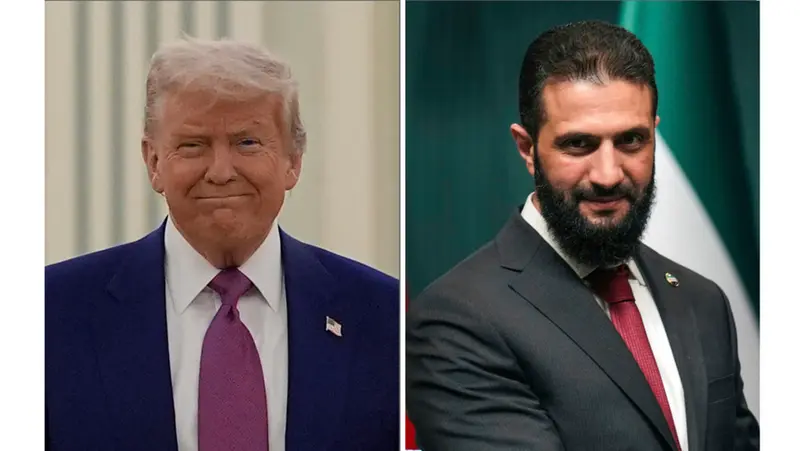
The White House is intensifying its pressure on Congress to lift the remaining sanctions imposed on Syria, warning that maintaining them could undermine the transitional government in Damascus — viewed by President Donald Trump’s administration as the cornerstone of its broader regional strategy.
Nearly a year after the swift uprising led by Ahmad al-Sharaa that toppled the former regime, President Trump issued an executive order lifting most U.S. sanctions, fulfilling his May pledge to give Syria a “chance to return” after more than a decade of civil war that left 90% of its population in poverty. However, the toughest sanctions — those imposed under the Caesar Syria Civilian Protection Act — remain in place, as their repeal requires congressional approval.
The Caesar Act: Between Moral Symbolism and Economic Obstacle
The Caesar Act, named after the Syrian defector who leaked photos documenting atrocities committed by the former regime, was designed to tighten the financial stranglehold on the Syrian government by penalizing supporters of its military and key industries.
Although the Trump administration issued a temporary 180-day waiver suspending enforcement of the act, experts argue that only a full repeal would restore international investor confidence.
In a detailed post on X, U.S. Special Envoy to Syria Tom Barak described the law as “a sanctions framework that served its moral purpose against Assad, but now it is choking a nation trying to rise from the rubble,” calling for “one of the most ambitious reconstruction efforts since post–World War II Europe.”
Intensive Moves Within Congress
According to a congressional source cited by Al-Monitor, White House officials and representatives from the State and Treasury Departments “have been explicit in urging Congress to repeal the Caesar Act fully and permanently.” The source added that Barak has personally contacted several senior Republican lawmakers to rally support for the initiative.
Skepticism, however, remains toward the al-Sharaa government, which was formed last July. The House Financial Services Committee voted on a bill introduced by Republican Representative Mike Lawler, conditioning the lifting of sanctions on progress in combating drug trafficking and protecting minorities. Despite opposition from most Democrats, the vote revealed divisions within both parties.
A New Bipartisan Alignment
Efforts to repeal the sanctions have united an unexpected coalition of lawmakers from both parties. Democratic Senator Jeanne Shaheen and Republican Representative Joe Wilson are leading the congressional drive to dismantle the act.
Syrian American organizations — many of which initially supported the Caesar Act — have also joined the campaign calling for its repeal.
“From Caesar himself to the families of the victims whose photos were exposed, everyone today is calling for the law’s repeal,” said Mouaz Mustafa, executive director of the Syrian Emergency Task Force in Washington.
In contrast, several pro-Israel groups in Washington continue to push for maintaining the sanctions against what they view as “a state that poses a potential threat to Israel and minorities.”
According to informed sources, senior Israeli officials — including Ron Dermer, a close aide to Prime Minister Benjamin Netanyahu — have contacted U.S. lawmakers urging them to preserve the Caesar Act.
The “Defense Authorization” Battle
In the latest version of the National Defense Authorization Act (NDAA), the Senate included an amendment introduced by Shaheen to repeal the Caesar Act, while Senator Lindsey Graham added another amendment requiring the president to certify every six months that the Syrian government complies with specific conditions — including refraining from military action against Israel and expelling foreign fighters.
An official from the Trump administration stated, “Keeping these conditions in place will confuse investors and undermine Syria’s prospects for full economic recovery.”
Negotiations between the Senate and House of Representatives are expected to begin soon to finalize the defense bill’s wording before sending it to President Trump for signing by the end of the year.