The Killing of Khamenei Opens a Transitional Phase in Iran and Puts Washington’s Calculations to the Test
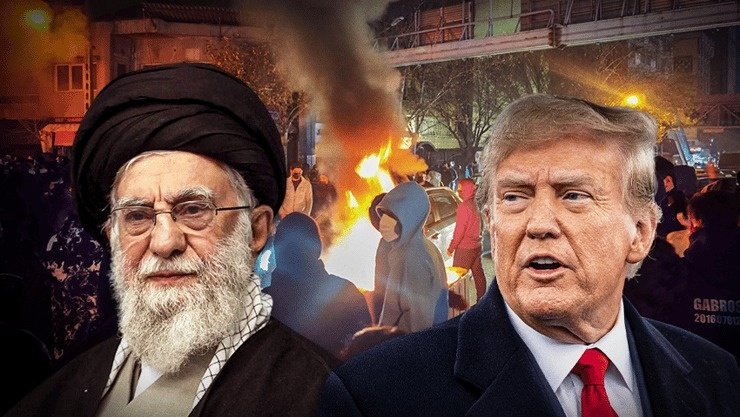
The killing of Iran’s Supreme Leader Ali Khamenei represents a pivotal turning point in the history of the Islamic Republic, not only because of his political and religious symbolism, but also because of the potentially ambiguous transitional phase it may open within the structure of the regime. This development comes at a sensitive regional and international moment, as attention is focused on how the United States will deal with the new landscape: will it consider it an opportunity to increase pressure on Tehran, or an entry point to reshape the rules of engagement with it?
For decades, Khamenei represented the center of gravity within the Iranian system, playing a pivotal role in balancing relations among various state institutions, including the presidency, the Guardian Council, the Islamic Revolutionary Guard Corps, and the religious establishment. With his absence, the system faces a new test related to its ability to manage the transfer of power and maintain internal cohesion.
Mechanism of Power Transition
The Iranian constitution stipulates that the Supreme Leader is chosen by the Assembly of Experts. However, the political reality in Iran is more complex, as centers of power overlap between the traditional conservative current, the security establishment, and networks of economic influence linked to the Revolutionary Guard.
Expert on Iranian affairs Dr. Soran Masoudi believes that the transitional phase represents a test of the system’s ability to produce a rapid internal consensus. He notes that any delay in resolving the leadership question may be interpreted externally as a point of weakness that could be exploited.
On the other hand, researcher in international politics Suhail Shamil argues that Iranian state institutions are accustomed to managing crises within a closed framework, adding that the likelihood of a rapid collapse of the regime remains low, despite expectations of a redistribution of influence within decision-making centers.
Washington’s Calculations
In Washington, the decision-making process is based more on strategic assessments of the balance of power than on rapid reactions. The U.S. administration understands that excessive pressure at a sensitive transitional moment could push the new Iranian leadership to adopt a more hardline rhetoric in order to strengthen its internal legitimacy.
U.S. President Donald Trump had previously stated that ending the war with Iran would only be achieved through what he described as “unconditional surrender,” emphasizing that Washington would not conclude any agreement with Tehran without this condition.
In contrast, Iran rejected these statements. The Iranian News Agency (IRNA) quoted Iranian officials as affirming that Tehran would not accept any conditions that undermine its sovereignty or impose surrender upon it, stressing the country’s ability to defend itself.
Expert on American affairs Dr. Joseph Haddad believes that the United States may move toward a dual policy that combines strengthening military deterrence in the Gulf while keeping indirect negotiation channels open through regional or European intermediaries.
Back Channels for Negotiation
In a related context, media reports indicated the existence of indirect Iranian messages regarding the possibility of opening a negotiation path to stop the war with the United States and Israel. These messages were reportedly transmitted through back-channel security contacts away from official diplomatic tracks.
Such channels often involve regional mediators or undisclosed meetings between unofficial envoys, a mechanism typically used when military confrontation is intense but the parties do not wish to close the door to negotiations completely.
These messages do not necessarily mean that Tehran accepts American conditions, but they reflect concern within some circles of Iranian authority about the possibility of the war expanding and turning into a broader regional confrontation.
Role of the Revolutionary Guard
The Iranian Revolutionary Guard is one of the most prominent players in any transitional phase within the country. In addition to its military strength, the Guard possesses an extensive network of economic and media influence, making it an influential actor in determining the course of the coming stage.
Security expert Yusuf Al-Sultan says that the Revolutionary Guard may seek to strengthen its presence in political decision-making in order to ensure the continuation of the system’s strategic approach, noting that the reaction of the military establishment will depend largely on the nature of the American position.
Regional Implications
The impact of developments in Iran is not limited to its internal affairs, as its influence extends to several regional arenas, most notably Iraq, Syria, Lebanon, and Yemen. Any change in leadership could lead to adjustments in the level of support for its allies or changes in the rules of engagement with American and Israeli forces.
In Iraq specifically, Masoudi warns of the possibility that some arenas linked to Iran may enter a phase of mutual “testing of the waters,” which could include limited military operations as part of testing the limits of escalation among the different parties.
Positions of Israel, Russia, and China
For Israel, the absence of Khamenei represents a sensitive development. Although it considers Iran’s nuclear program an existential threat, it understands that any chaos inside Iran could produce a leadership less susceptible to deterrence.
Russia and China, meanwhile, deal with Iran as a strategic partner in confronting American influence. Western estimates suggest that Moscow may increase its intelligence support to Tehran, while Beijing tends to strengthen economic cooperation while calling for de-escalation to preserve the stability of energy markets.
Could This Phase Open a Window for a Nuclear Agreement?
The possibility of resuming negotiations over Iran’s nuclear program remains one of the most prominent questions. Observers believe that the new leadership may view de-escalation as an opportunity to ease economic sanctions, but at the same time it will not want to appear as retreating under external pressure.
Scenarios for the Next Phase
Observers summarize the possible paths into three main scenarios:
The first is mutual containment based on managing tensions without sliding into a broad confrontation.
The second is limited escalation involving strikes and mutual deterrence messages.
The most dangerous scenario lies in a miscalculation that could lead to a wider confrontation in the region.
Ultimately, the matter is not only about the person of the Supreme Leader, but about the structure of an entire system and complex regional and international balances. As a new phase begins in Iran, how major powers deal with this transformation will remain a decisive factor in determining the course of events in the Middle East.