Tag: s3

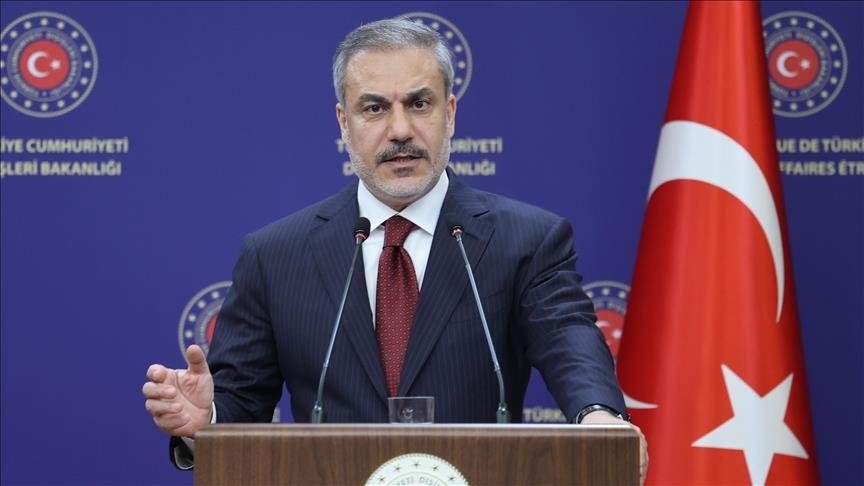
  • Fidan: Absence of Agreement Between Damascus and SDF Could Lead to Serious Clashes

    Fidan: Absence of Agreement Between Damascus and SDF Could Lead to Serious Clashes

    Turkish Foreign Minister Hakan Fidan warned of the possibility of serious clashes erupting in northern Syria if the integration agreement of the Syrian Democratic Forces (SDF) into the institutions of the Syrian Interim Government fails to be implemented, noting the absence of any indicators of actual progress on this path.

    In a televised interview on Saturday night – Sunday, Fidan said that the Kurdish People’s Protection Units must withdraw from predominantly Arab areas, considering this withdrawal a top priority, and that ignoring it could lead to a dangerous escalation.

    The Turkish minister explained that he held an extensive phone call with the Syrian Interim Government’s Foreign Minister Asaad Al-Sheibani on Friday, during which they discussed the outcomes of recent meetings between Damascus and the SDF with the participation of the U.S. envoy to Syria, Tom Barrett, adding that the talks did not result in any actual agreement regarding integration.

    Fidan pointed out that Ankara was not presented with any roadmap related to dealing with PKK fighters or eliminating tunnels and missile systems inside Syrian territory, affirming that Turkey considers the removal of the party’s elements and affiliated forces from Syria a security priority.

    The minister confirmed that Turkey is cooperating with the Syrian Interim Government to follow up on the implementation of the March 10 agreement concerning the unification of armed groups under a single military structure, stressing that the Syrian issue is a major national security concern for Turkey.

    In a related context, Fidan revealed a forthcoming trilateral meeting between Turkey, the United States, and Syria to discuss field and political developments in the country, emphasizing that the greatest current danger in the region is Israel’s expansion inside Syrian territory.

    The minister added that Turkey supports the efforts of the Syrian Interim Government in extending its authority within the country and handles the Syrian file with utmost seriousness, far from any ideological motives.

    Fidan clarified that around 500,000 Syrian refugees have returned from Turkey to their country since the fall of Bashar al-Assad’s regime last December, pointing out that continued stability in Syria will help boost the economy and encourage the return of more refugees.
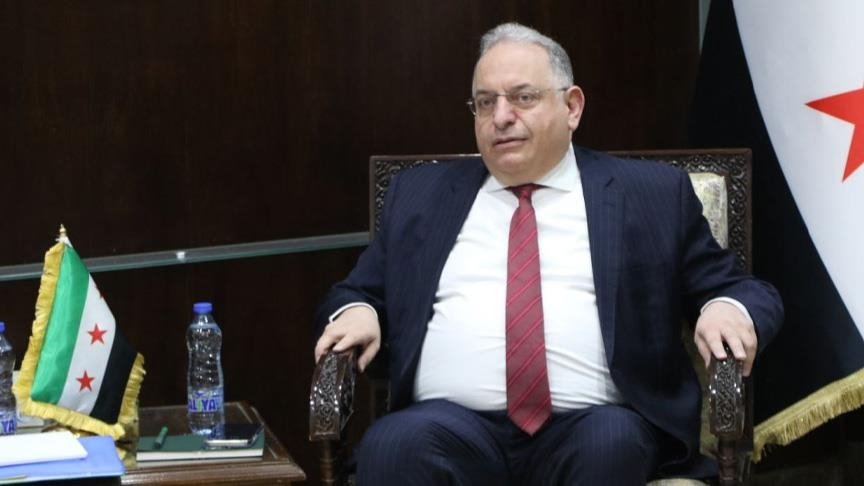
  • Syrian Finance Minister: We Have Not Borrowed from the Central Bank and Are Considering Issuing Sukuk in 2026

    Syrian Finance Minister: We Have Not Borrowed from the Central Bank and Are Considering Issuing Sukuk in 2026

    Mohammed Yassar Barniyeh, the Finance Minister of the Syrian Transitional Government, stated that the government has not resorted to borrowing from the Central Bank of Syria during the current period. He confirmed that all previous loans have been fully repaid and that the upcoming general budget will not be financed through monetary deficit.

    In an interview with Al Arabiya Business channel, Barniyeh explained that the ministry is working on reforming financial legislations and combating money laundering in compliance with the standards of the Financial Action Task Force (FATF). He noted that a FATF delegation is expected soon to review Syria’s classification with the aim of removing it from the grey list.

    The minister added, “Regardless of the timing of the visit and classification, we are determined to reform legislation and financial systems to be more transparent and efficient,” stressing that the Central Bank of Syria must be independent and that the government supports it to maintain the stability of the Syrian pound.

    Barniyeh indicated that budget revenues primarily depend on taxes and fees alongside revenues from certain exports such as phosphates. He pointed out that tax and customs revenues have seen a significant increase as a result of implementing reforms and combating corruption.

    He explained that work is underway to prepare the 2026 budget, which he described as “carrying economic and social messages, not merely a budget of numbers for collection and expenditure.” He added that the 2025 budget may end with a slight surplus or a limited deficit that can be financed without economic pressure.

    The minister mentioned that the Ministry of Finance is studying the issuance of local sovereign sukuk next year in a limited volume, aiming to create an indicator to help price Syrian financial assets. He added that any deficit could be financed through these issuances instead of financing from the Central Bank.

    Barniyeh concluded by saying that the ministry is not currently considering issuing sukuk or bonds in international markets but may study this option at a later stage.

  • Seban Hamo: The Success of the Integration Process Depends on Respecting the Identity of the Forces and the Rights of Syrian Components

    Seban Hamo: The Success of the Integration Process Depends on Respecting the Identity of the Forces and the Rights of Syrian Components

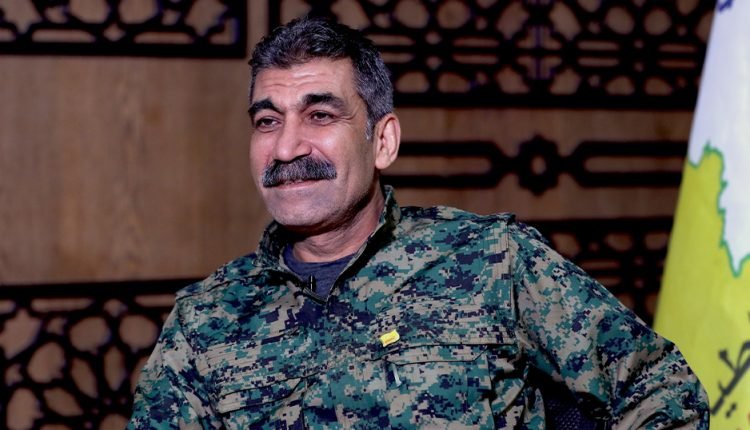
    Seban Hamo, member of the General Command of the Syrian Democratic Forces (SDF) and a member of the military negotiation committee with the Interim Government, stated that the SDF is ready to join the newly planned Syrian army, “provided that the integration process is based on principles that respect the identity of the forces, their struggle, and sacrifices, and guarantees the rights of all components of the Syrian people without exception.”

    In an extensive interview conducted by the SDF Media Center, Hamo emphasized that the forthcoming steps of the Interim Government will determine the course of the integration process, “whether it is accelerated, slowed down, or even frozen,” pointing out that the SDF will remain a national unifying force defending all Syrians.

    He explained that the term “integration” has been introduced in negotiation discourse since the signing of the March 10, 2025 agreement, stressing that integration is not merely a military procedure but a political step towards building a national army. He noted that “any new Syrian army cannot be built without the participation of the SDF, which has fought decisive battles against ISIS and made significant sacrifices for Syria’s unity.”

    Hamo added that “some parties within the Interim Government still think with the mentality of the former regime and try to impose visions aimed at canceling or marginalizing the SDF’s identity,” describing this as “unacceptable and cannot be called national.” He stressed that any integration process must recognize the role of the SDF and the rights of all Syrian components: “Sunnis, Kurds, Druze, Alawites, and Christians.”

    Positive Atmosphere but No Concrete Results

    Hamo pointed out that the recent meeting in Damascus, which involved the Ministry of Defense and American officials, was characterized by a positive atmosphere but did not result in any written agreements, only general promises. He said, “We demanded that this atmosphere be translated into practical steps on the ground.”

    He explained that trust obstacles still exist, and the Interim Government has not taken sufficient measures to instill reassurance among the components, referring to recent mass killings targeting Alawites and Druze and the widespread security chaos, describing these practices as “a serious challenge to integration efforts.”

    Hamo also highlighted that the recent attack on Sheikh Maqsoud neighborhood in Aleppo, despite the withdrawal of SDF forces according to the March agreement, raised significant concerns about the intentions of some parties within the Interim Government. He said, “While we talk about integration, government-affiliated factions are attacking the neighborhood from ten axes, which contradicts the positive rhetoric we hear.”

    Return of Afrin Residents

    Hamo clarified that accelerating the integration process depends on the Interim Government’s steps regarding the rights of the components, noting that the government’s stance on the Afrin issue “will be the true measure of intentions.”

    He stated, “The return of displaced Afrin residents, compensation for those affected, and holding accountable those responsible for violations will be indicators of the government’s seriousness in building a national army. If they act justly towards Afrin, the government can be viewed differently.”

    Hamo emphasized that the SDF “has proven to be the only national force capable of communicating with all Syrian components and is ready to be the core of the new Syrian army and a guarantee for correcting the political and military course.”

  • Anticipated talks between SDF and transitional government on military integration

    Anticipated talks between SDF and transitional government on military integration

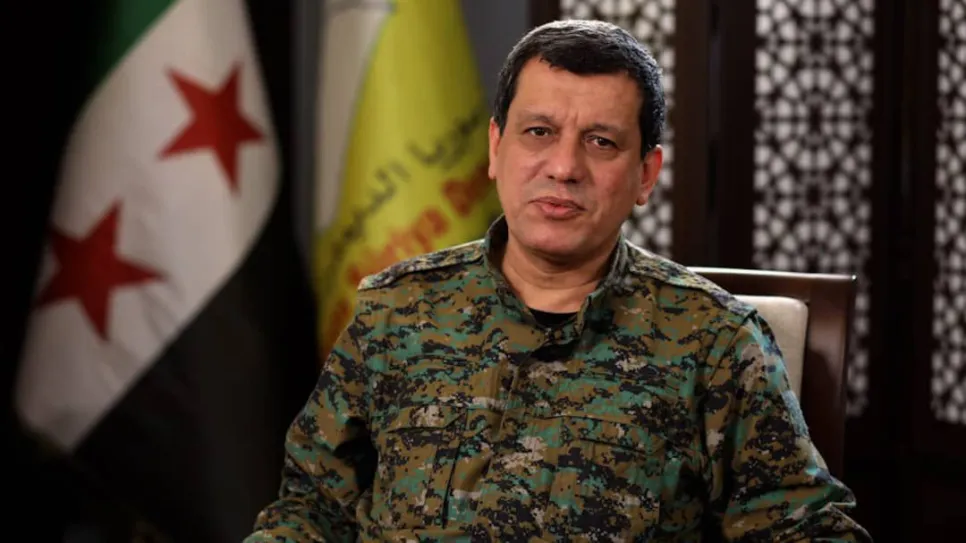
    The commander of the Syrian Democratic Forces (SDF), Mazlum Abdi, announced that a delegation from the SDF’s military committee will soon head to Damascus to discuss how to integrate into the Syrian army affiliated with the transitional government.

    Abdi made the statement during a speech at the 10th anniversary celebration of the SDF’s founding, affirming that the committee will soon discuss the mechanisms of integration. He added that the SDF’s anti-terrorism units will continue to fight against ISIS across Syria.

    Earlier, the Minister of Defense in the transitional government, Maher al-Abous, had announced reaching an agreement with the SDF on a comprehensive ceasefire, stating that he met with Mazlum Abdi in Damascus and agreed to a complete ceasefire on all fronts and military deployment points in northern and northeastern Syria, with implementation to begin immediately.

    This agreement comes after violent clashes in the areas of Ashrafieh and Sheikh Maqsoud in Aleppo between the Internal Security Forces (Asaiish) and the transitional government.

  • Rural Damascus: Citizen Assaulted Inside Police Station, Family Demands Accountability

    Rural Damascus: Citizen Assaulted Inside Police Station, Family Demands Accountability

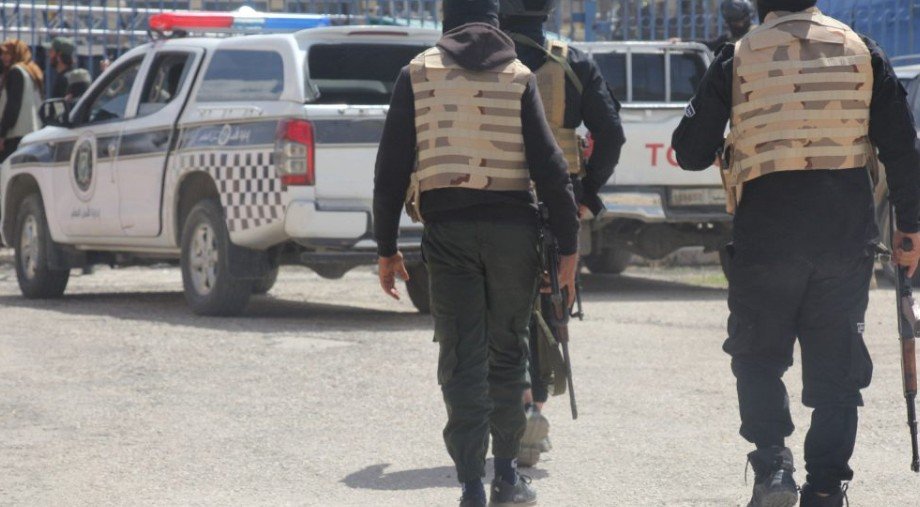
    Local sources reported that a citizen in Rural Damascus was assaulted and detained yesterday by the head of the Jdeidet Yabous police station along with other officers, where he was taken to the station and subjected to beatings and humiliation.

    According to the Syrian Observatory, the citizen sustained multiple injuries, including a broken rib, bruises, and head wounds. The family also reported that police forces raided their home, where women were insulted and verbally abused.

    The sources explained that initial investigations resulted in the citizen’s release after his innocence was confirmed. However, he was later summoned on charges of threatening a customs employee, an accusation the family categorically denies.

    This incident comes as part of a series of documented violations in various areas of Rural Damascus, according to the Observatory, reflecting the growing misconduct of some members of the Syrian Interim Government forces.

    The family called on the Minister of Interior and the Public Security Directorate to launch a comprehensive and transparent investigation into the incident and hold those responsible accountable, in order to restore their legal rights.

  • Sheikh Mowafaq Tarif: Netanyahu Commits to Protecting the Druze in Southern Syria and Disarmament

    Sheikh Mowafaq Tarif: Netanyahu Commits to Protecting the Druze in Southern Syria and Disarmament

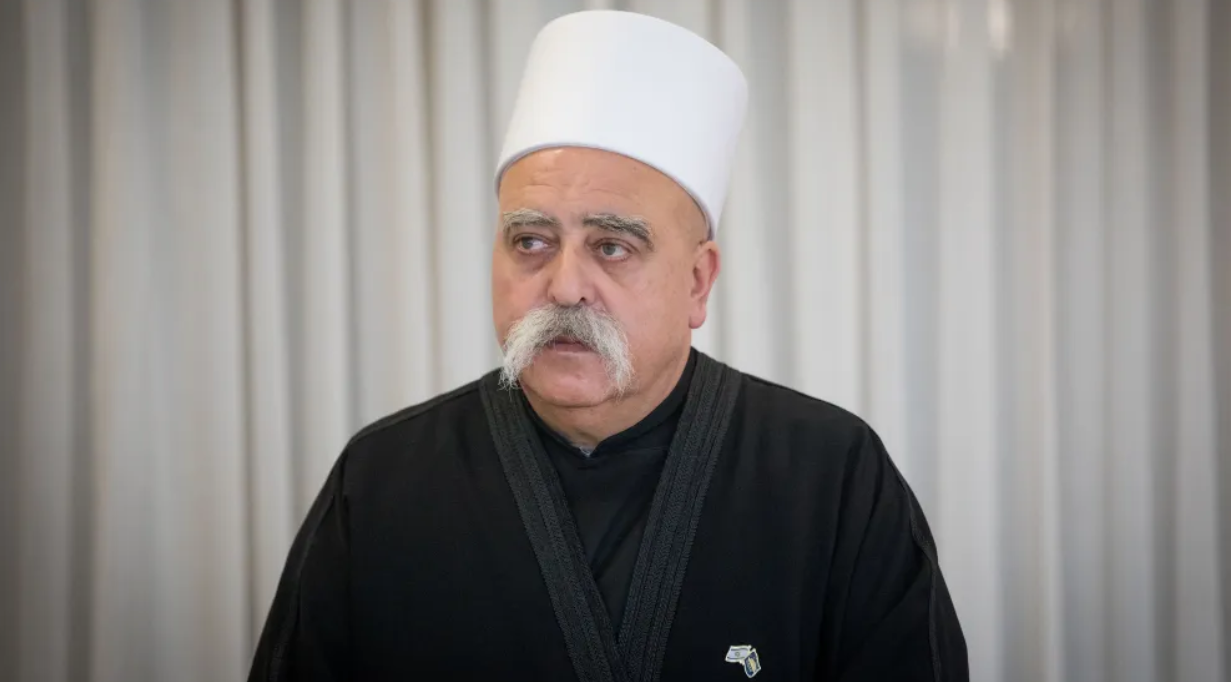
    Sheikh Mowafaq Tarif, the spiritual leader of the Druze community in Israel, said on Sunday in an interview with Delil24 that Israeli Prime Minister Benjamin Netanyahu pledged that the anticipated agreement with Syria will include disarmament in the south of the country and ensuring the protection of the Druze community in the region.

    He added that the issue of the kidnapped Druze was raised during the discussions, but Netanyahu made no commitment to assist in this matter.

    It is worth noting that Sheikh Tarif met last August with U.S. envoy to Lebanon and Syria, Tom Barrack, where they discussed similar issues concerning the situation of the Druze community in Syria and the region.

  • Head of Turkish Intelligence Visits Damascus to Meet Syrian President Ahmad Al-Shara

    Head of Turkish Intelligence Visits Damascus to Meet Syrian President Ahmad Al-Shara

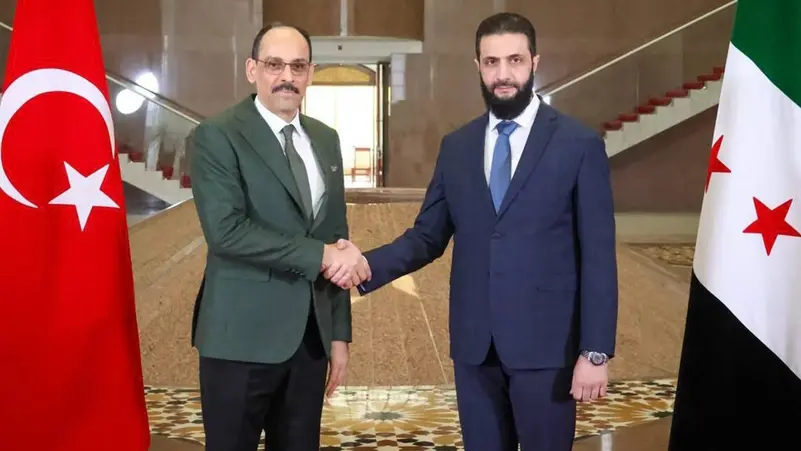
    Damascus – Ibrahim Kalin, head of Turkish intelligence, arrived today, Wednesday, in the Syrian capital Damascus for his second visit of this kind in recent months to meet with Syrian President Ahmad Al-Shara.

    Kalin previously visited Damascus last May, where he held talks with Al-Shara and senior Syrian officials focused on Syria’s territorial unity, sovereignty, and political stability, according to security sources.

    SDF Integration and Negotiations with Israel

    Anadolu Agency reported that the current visit addresses the issue of integrating elements of the “Syrian Democratic Forces” (SDF) into the Syrian army after disarmament, amid stalled negotiations between Damascus and the SDF, despite ongoing communication between the two parties.

    The visit also comes as the Syrian government confirms that discussions are underway, mediated by the United States, to reach a security agreement with Israel aimed at restoring calm in southern Syria and ensuring Israeli withdrawal from the buffer zone.

    Syrian-Turkish Cooperation

    Months ago, Damascus and Ankara signed a security agreement to train Turkish forces within the Syrian army, with Ankara affirming its military and political support for Syria, preserving the country’s unity, and integrating all armed factions into the army, including the SDF.

  • Netanyahu Warns Qatar After Doha Strike: “We Will Do It”

    Netanyahu Warns Qatar After Doha Strike: “We Will Do It”

    Israeli Warning to Qatar
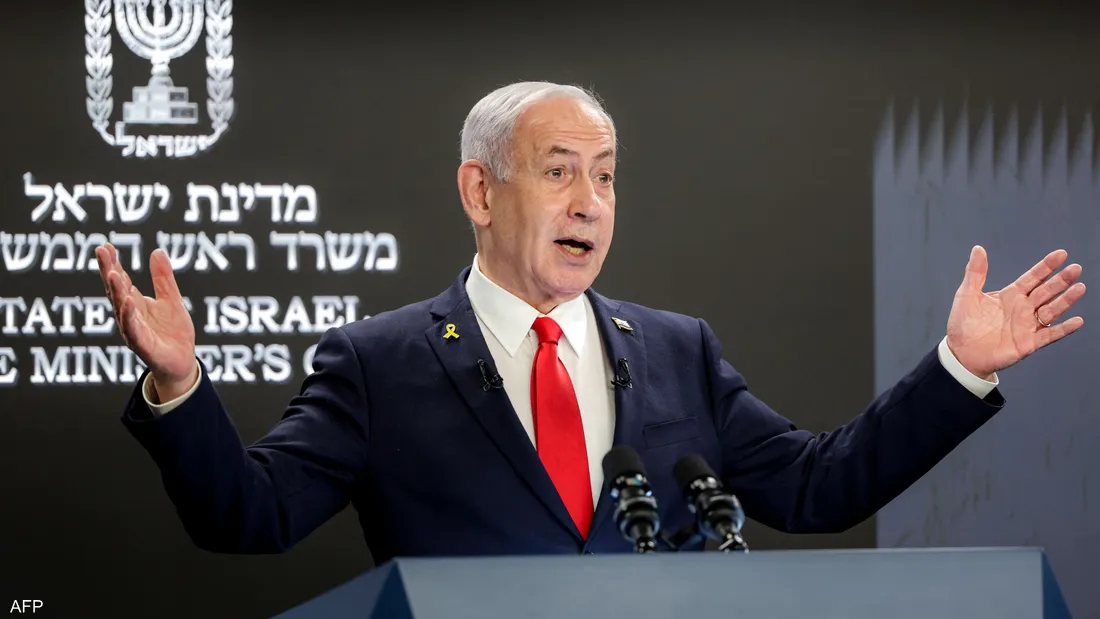
    Israeli Prime Minister Benjamin Netanyahu issued a warning to Qatar on Wednesday, one day after an Israeli strike in Doha targeted the residence of senior Hamas leaders.

    In a video statement delivered in English, Netanyahu said:
    “Either you expel the terrorists or bring them to justice. If you don’t, we will.”

    Linking the Attack to September 11
    Netanyahu referred to the anniversary of the September 11, 2001 attacks in the United States, saying:
    “Tomorrow (Thursday) is September 11. We remember 9/11, when terrorists carried out the worst massacre on American soil since the founding of the United States. We have our own 9/11 — October 7 — when terrorists committed a massacre against the Jewish people.”

    He added:
    “What did America do after 9/11? It hunted down the terrorists wherever they were. And we are following the same approach in targeting those responsible for the October 7 attacks.”

    Details of the Israeli Strike in Doha
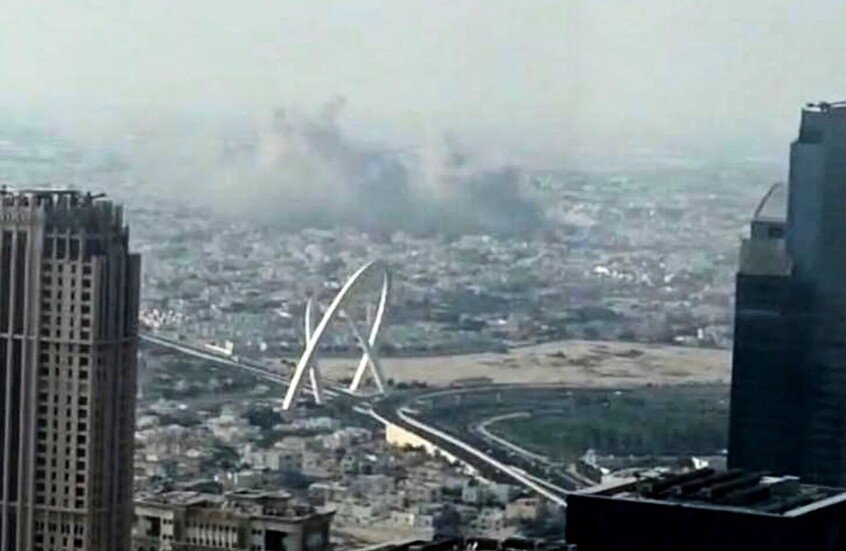
    The Israeli strike in Doha targeted Hamas leaders while they were meeting in a residential compound.

    Netanyahu confirmed that the operation targeted “the masterminds of the terrorists” who committed the October 7 massacre, drawing a comparison to the U.S. operation against Osama bin Laden.

    Results and Hamas Response
    Israel has not yet released an official statement about the outcome of the strike. Meanwhile, Hamas confirmed that its targeted leaders survived, although five people were reported killed in the attack.

  • Egypt and Turkey Warned Hamas Leaders of Israeli Assassination Plans Before the Doha Strike

    Egypt and Turkey Warned Hamas Leaders of Israeli Assassination Plans Before the Doha Strike

    Prior Warnings
    Israeli Channel 14 reported that Egypt and Turkey had informed Hamas leaders in Doha of serious warnings about potential assassination operations planned by Israel.

    Mediation and Protection
    According to The Wall Street Journal, Egyptian and Turkish officials urged Hamas leadership to strengthen their security measures to ensure the continuation of indirect negotiations with Israel.

    Shock After the Airstrike
    Maariv newspaper reported that Egypt and Qatar were in a state of “shock” following the Israeli strike on Doha, warning that it could jeopardize the proposed prisoner exchange deal.

    Yedioth: “Decapitation Strategy”
    Yedioth Ahronoth stated that the operation should have been carried out long ago, with the goal of eliminating Hamas’s senior political and military leadership abroad.

    International Outrage
    The attack on Doha triggered widespread international condemnation, with former President Trump assuring the Emir of Qatar that such operations would not be repeated.

  • Does Al-Shara’a Participate in UN Meetings Despite Sanctions?

    Does Al-Shara’a Participate in UN Meetings Despite Sanctions?

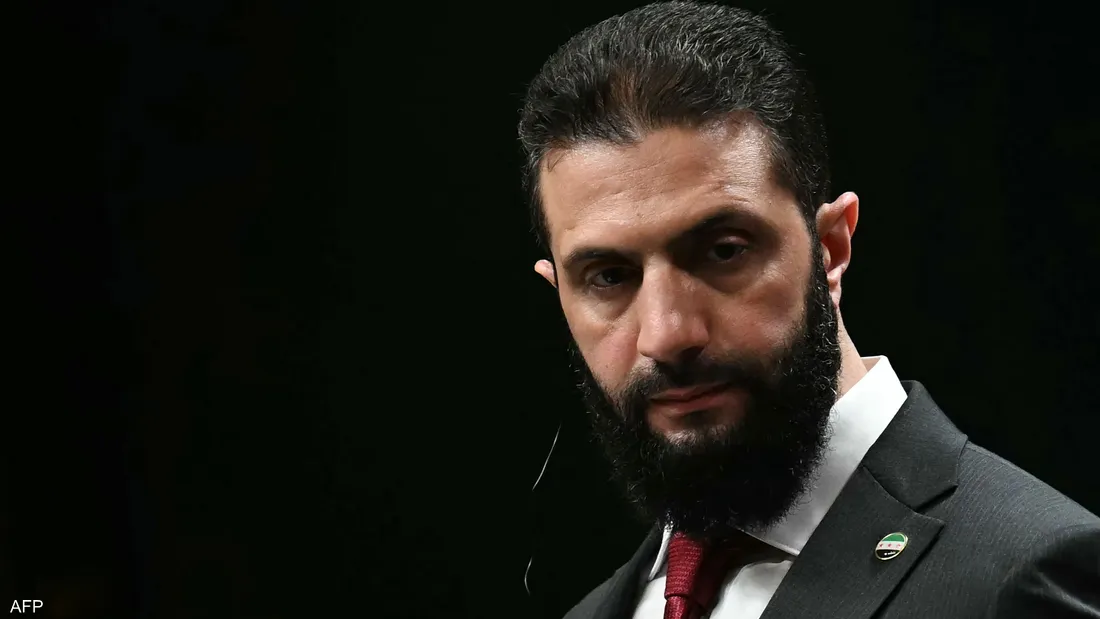
    Syrian President Ahmed Al-Shara’a is scheduled to attend the 80th session of the United Nations General Assembly in New York this month, raising questions about how he would enter the United States despite the international sanctions imposed on him.

    Background of Sanctions and US Policy Shifts

    The administration of the US President Donald Trump had removed Hay’at Tahrir al-Sham—Formerly led by Al-Shar’—from the list of “Foreign Terrorist Organizations.” In July 2025, Washington pushed for a review of the sanctions imposed on Syria, including those against Al-Shar’a, as part of support for the Syrian Interim Government in its fight against extremist groups.

    US Commitment and the Headquarters Agreement

    The 1947 Headquarters Agreement obligates the United States to allow representatives of UN member states to enter its territory. However, in cases involving officials under international sanctions, entry requires a special exemption approved by the Security Council Sanctions Committee.

    Travel Ban Exemption Mechanism

    • Security Council Resolution 2734 (2024) maintained a mechanism allowing for the issuance of specific travel ban exemptions.
    • Requests are typically submitted at least 15 working days in advance, while urgent cases are processed within 24 hours.
    • Al-Shar’a has obtained multiple temporary exemptions for foreign visits this year, but so far, no official exemption has been announced permitting his travel to New York.

    Diplomatic Immunity Is Not Sufficient

    Al-Shar’a enjoys immunity as a head of state under the 1961 Vienna Convention on Diplomatic Relations and holds a diplomatic passport that facilitates his movement. However, these privileges do not override UN sanctions, which remain in effect unless an official special exemption is granted.

    The Legal-Political Equation

    If Al-Shar’ attends the UN meetings, it will not constitute a breach of sanctions but rather result from an exceptional legal mechanism that balances compliance with international sanctions while ensuring Syria’s representation in one of the world’s most important diplomatic forums.