Syrian Students Pay the Price: Ongoing Teachers’ Strike Exposes the Depth of the Education Crisis
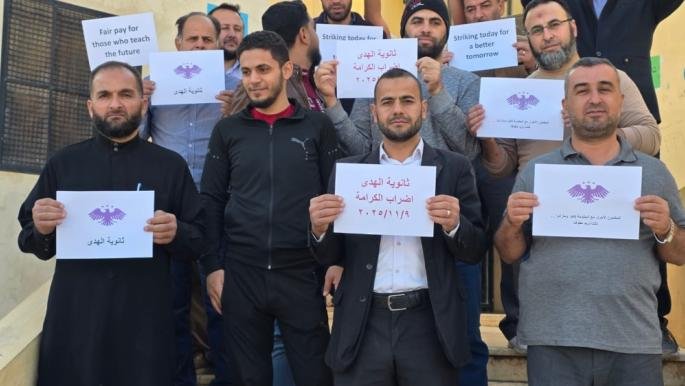
The “Dignity Strike” announced by teachers in northern Syria continues in protest against what they described as the “marginalization of the education sector and the deterioration of living conditions,” while students remain the most affected by the suspension of the educational process.
Since Monday, the province of Idlib and its countryside have witnessed a general strike encompassing about 245 schools — including primary, secondary, and camp schools — as well as educational programs such as Generation of Empowerment and Syria’s Buds.
According to teachers’ statements, the strike came as a result of the “empty promises” made by the relevant authorities regarding salary increases, support for teaching staff, and the reinstatement of dismissed employees, none of which have been implemented on the ground.
Educational staff in several towns and cities of western Aleppo countryside — including Atarib and Al-Sahara — also announced the suspension of classes in solidarity with the strike, stressing that the current salaries “do not cover the bare minimum cost of living,” while other sectors in the region have witnessed wage increases.
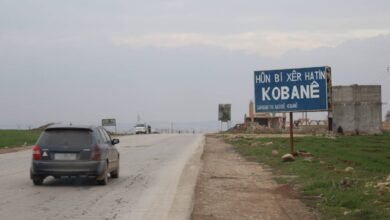
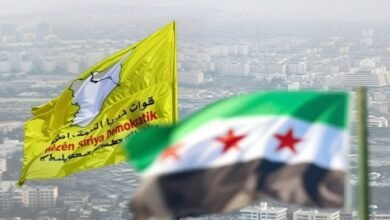
In areas under the Autonomous Administration of North and East Syria, the education sector faces additional challenges, foremost among them the lack of official recognition of educational certificates, leaving the future of thousands of students uncertain. Parents are calling for these certificates to be officially recognized to ensure the stability of the educational process.
In the city of Tabqa, west of Raqqa, the Autonomous Administration has begun preparing prefabricated buildings (caravans) in school courtyards to accommodate students, after many school buildings were allocated to shelter displaced people from Afrin and Al-Shahba during years of conflict.
For its part, the Syrian Observatory for Human Rights has documented cases of children being used in protests and carrying political and religious slogans, considering this a violation of international humanitarian law. It called for protecting children from involvement in conflicts, especially given the fragility of the education sector, the spread of illiteracy, and fears of phenomena such as abduction.
UN reports, including one by UNICEF, confirm that about 2.4 million Syrian children remain out of school, while 6.5 million children are in urgent need of support amid the ongoing economic collapse and the destruction of educational infrastructure.
Observers believe that the educational crisis in Syria is no longer solely linked to the effects of war, but also to the declining priorities of the transitional government in reconstruction and teacher support — a situation that threatens the emergence of a generation suffering from illiteracy and poor education, with consequences for the country’s future as a whole.