Syria Seeks Foreign Investment to Rebuild Destroyed Power Plants
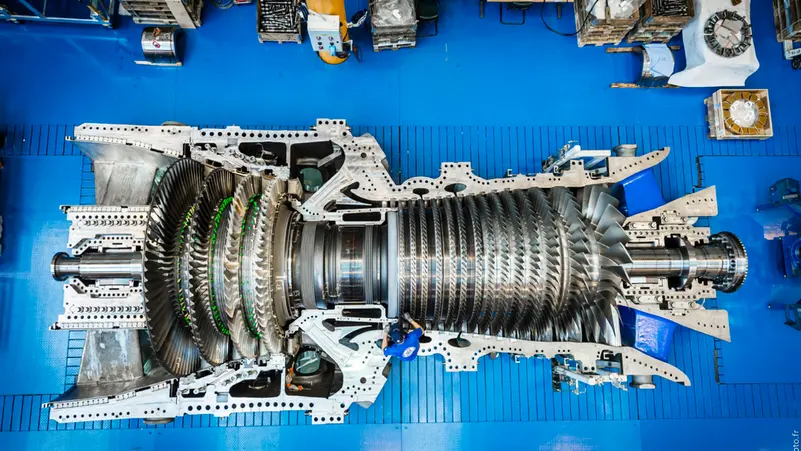
Three sources familiar with the matter told Reuters that General Electric Vernova of the United States and Siemens Energy of Germany are in talks to supply gas turbines for a $7 billion energy project in Syria, aimed at rebuilding the country’s war-damaged electricity sector.
According to the sources, the project — which was initially agreed upon in May between Syria’s transitional government and a subsidiary of Power International Holding of Qatar — includes the construction of four combined-cycle gas turbine power plants with a total capacity of 4,000 megawatts, in addition to a 1,000-megawatt solar power plant.
The sources suggested that both Siemens Energy and GE Vernova may be awarded turbine contracts, but noted that final agreements have not yet been signed, and neither the exact contract value nor the signing timeline has been determined. One source added that the talks could also cover upgrading Syria’s electricity grid infrastructure.
In a statement to Reuters, Siemens Energy confirmed that a local delegation had met with Syrian officials “to explore ways to improve the country’s energy supply,” adding that it “stands ready to contribute its technical expertise if it helps establish a stable and reliable power network.”
GE Vernova and Power International Holding declined to comment, while Syria’s Ministry of Information did not respond to requests for comment.
This development follows the lifting of most U.S. sanctions on Damascus earlier this year, opening the door for Western companies to explore infrastructure reconstruction opportunities in the country.
The Syrian transitional government, led by interim President Ahmed al-Sharaa, is pursuing an overhaul of the energy sector through the launch of new holding companies and production initiatives, after more than a decade of conflict destroyed much of Syria’s power generation and transmission network.
Official estimates show that Syria’s natural gas output fell to 3 billion cubic meters in 2023, down from 8.7 billion cubic meters in 2011.