Syria Between Sectarian Rhetoric and Social Division: Reports Warn of Threats to the Country’s Future
More than 13 years after the outbreak of the conflict, challenges in Syria are no longer limited to military operations and territorial control but have extended to the social fabric, which faces sectarian, ethnic, and regional divisions, according to human rights reports and international research studies.
Reports issued by the International Crisis Group and the Carnegie Middle East Center indicate that the interim government formed after the fall of the former regime has so far failed to establish a unified national project. Some political and media rhetoric has instead contributed to deepening divisions by mobilizing sectarian and religious sentiments.
Multiple Targeted Communities
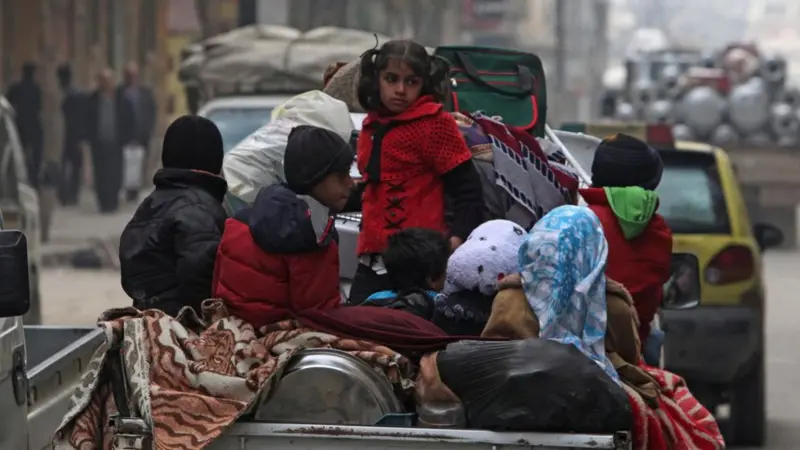
Reports by Human Rights Watch and other rights organizations document cases of forced displacement and arrests based on religious and ethnic grounds. Coastal and Sweida regions have witnessed incidents described as “massacres and violations” against civilians, while Christians, Kurds, and Druze have been subjected to media campaigns or military operations that raised fears of systematic targeting.
Analysts point out that official media has played a prominent role in fueling division by portraying certain groups as existential threats and demonizing them in the context of the conflict, making religious or national affiliation sufficient grounds for marginalization or targeting.
Tribes as Instruments of Conflict
Among notable developments is the involvement of some Arab tribes in confrontations of a sectarian nature, after the conflict with Kurds and Druze was framed as an identity struggle. Experts believe this policy turned tribes into tools in the hands of conflict parties, even though they were not originally primary actors.
Long-term Threat
UN reports warn that continuing sectarian and ethnic rhetoric may lead to reproducing violence across generations, creating a fertile environment for the growth of extremism and militant groups, especially with rising fear and distrust among communities.
Proposed Solutions
Analysts suggest that adopting political and administrative decentralization could be an entry point to protect social diversity and reduce tensions, while others emphasize the importance of changing the media and political approach based on polarization in favor of a comprehensive national project that acknowledges and protects pluralism.
While international and UN calls continue to halt human rights violations and adopt a comprehensive approach to national reconciliation, concerns remain that ongoing sectarian mobilization may prolong the crisis and render Syria’s future hostage to internal divisions difficult to overcome.