Southern Syria Closes the Chapter of the Eighth Brigade After Political and Security Clashes
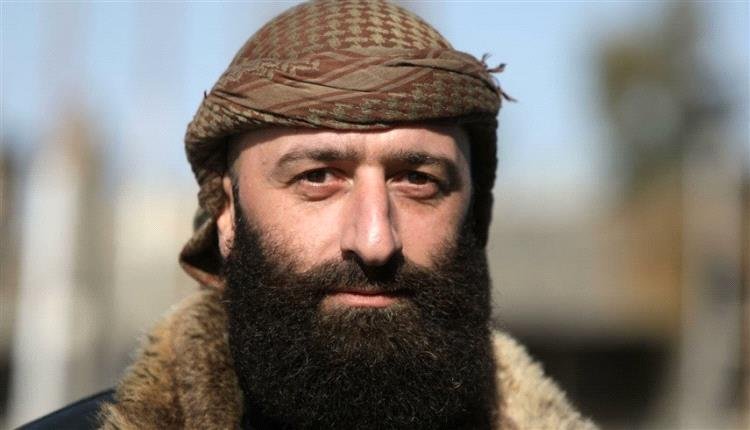
The Eighth Brigade, one of the most prominent military formations in Daraa Governorate in southern Syria, officially announced its dissolution on April 13, 2025, placing all its human and military capabilities at the disposal of the Ministry of Defense, months after the fall of the regime of deposed President Bashar al-Assad.
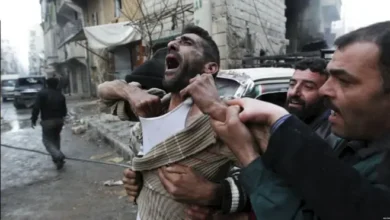
The decision came after a security meeting held in the city of Bosra al-Sham between the brigade’s leadership and officials from the Ministries of Interior and Defense, following security tensions in the region, most notably the assassination of military commander Bilal al-Daroubi al-Miqdad by two members of the brigade.
An Origin Linked to the Russian Settlement
The Eighth Brigade was established in July 2018 under a settlement agreement sponsored by Russia between opposition factions in Daraa and the former regime, following a large-scale military campaign that ended opposition control over southern Syria. The brigade was subsequently attached to the Russian-backed Fifth Corps, while retaining near-complete autonomy in administering its areas.
The brigade is considered an extension of the “Shabab al-Sunna” formation established in 2012 and led by Ahmad al-Awda, which fought battles against former regime forces in Bosra al-Sham and its surroundings, before gradually expanding its influence and becoming one of the largest armed factions in Daraa, with support from the joint operations room known as the “MOC.”
Ahmad al-Awda and a Pivotal Role in the South
Ahmad al-Awda emerged as the faction’s leader since its establishment and participated in several battles within the ranks of the Free Syrian Army, before engaging in the 2018 settlement negotiations that resulted in the formation of the Eighth Brigade.
In the following years, the brigade played a complex role in southern Syria; it participated in security operations against Islamic State (ISIS) cells and engaged in repeated clashes with local groups and forces affiliated with the former regime, while facing accusations of involvement in kidnappings and assassinations.
Despite officially joining the Fifth Corps, the brigade maintained a level of autonomy that raised sensitivities within regime security agencies, leading in 2021 to the transfer of its affiliation to the Military Intelligence Directorate, as part of efforts to subject it to greater control.
The Turning Point of the Regime’s Fall
With the launch of the “Deterrence of Aggression” battle on November 27, 2024, which ended with the fall of the regime, factions in Daraa announced the formation of the “Southern Operations Room” under al-Awda’s leadership, managing within 48 hours to take control of the entire governorate.
The Eighth Brigade was the first military formation to enter the capital, Damascus, on December 8, 2024, before withdrawing on the same day. Following the regime’s fall, al-Awda met with Syrian President Ahmad al-Sharaa and expressed his readiness to dissolve the brigade and integrate its members into the new army.
An Official End
Events accelerated in April 2025 following the assassination incident in Bosra al-Sham, as General Security forces intervened and deployed in several towns in eastern Daraa countryside, before a security meeting was held that concluded with an agreement to dissolve the Eighth Brigade and hand over those involved.
On April 13, 2025, the brigade’s spokesperson, Colonel Akram al-Hourani, officially announced the decision, confirming that all the faction’s assets were placed at the disposal of the state, thus closing the chapter of one of the most prominent military formations that had shaped the security and military landscape in southern Syria since 2018.
The crisis had escalated earlier when the brigade’s commander, Ahmad al-Awda, called for fighting the Syrian government and described it as a “duty,” issuing a direct threat to President Ahmad al-Sharaa in a recorded video in which he criticized what he described as “overriding the will of the people of the south” and imposing security measures by force, accelerating the course of the political and security confrontation that ultimately ended with the faction’s official dissolution.