Report: Wildfires on the Syrian Coast and Their Damages in Summer 2025
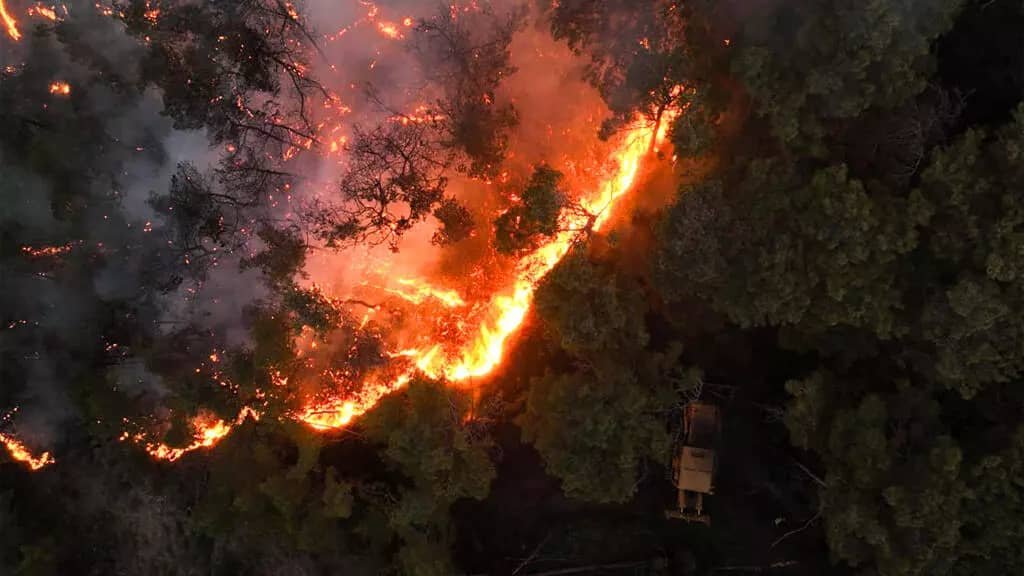
During the summer of 2025, the Syrian coastal region, particularly the governorates of Latakia and Tartus, experienced an unprecedented wave of forest fires described as the worst in decades. The fires began on July 3rd and lasted for weeks, consuming vast areas and causing severe environmental, economic, and human losses amid complex challenges faced by firefighting efforts.
According to reports from the Syrian Agriculture and Rural Development Organization (SARD) and the United Nations Office for the Coordination of Humanitarian Affairs (OCHA), the fires spread across at least 28 sites, destroying more than 15,000 hectares of forest and agricultural land—equivalent to 3% of Syria’s forest cover. Affected areas included Jabal al-Turkman, Kasab, and Al-Badrousiya in the Latakia countryside, as well as northern Tartus countryside, including villages such as Qastal Maaf and Nab’ al-Mar.
The fires caused the displacement of approximately 1,150 people and affected over 140,000 individuals. They destroyed 70 rural homes and inflicted agricultural losses including olive and citrus orchards, as well as the loss of 202 beehives and 13 heads of livestock. Additionally, electricity and water supplies were cut off for more than 10,000 people due to damage to the Basit power station and medium-voltage lines. Thick smoke spread to Hama and southern Idlib, increasing health risks, especially for children and the elderly.
Several factors contributed to the worsening situation, including strong winds exceeding 40 km/h, drought due to low rainfall, and rugged mountainous terrain. Mines and remnants of war posed additional hazards, as unexploded ordnance explosions hampered firefighting teams. Reports also indicated that outdated firefighting equipment and weak communication networks disrupted rapid response.
The Syrian government mobilized civil defense teams and received international support from Turkey, Qatar, Jordan, and Lebanon, which included firefighting aircraft and support trucks. The United Nations also provided urgent funding of $625,000 to support 2,000 affected families. Although the fires were relatively contained by mid-July, the risk of recurrence remained.
This disaster reveals the fragility of infrastructure and emergency plans, highlighting the need to develop long-term preventive strategies, including updating firefighting equipment, forest management, and rehabilitating affected areas to prevent repeated losses.