Recurring Escalation Following Meetings Between the Autonomous Administration and the Transitional Government
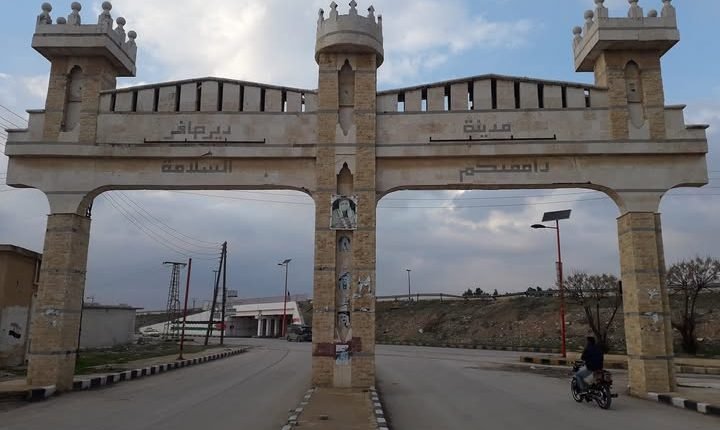
Military attacks and media campaigns attributed to parties and factions linked to Syria’s transitional government have repeatedly followed every meeting between a delegation of the Democratic Autonomous Administration of North and East Syria and representatives of the transitional government, reflecting an organized escalation that threatens the path of understandings and reproduces tensions on the ground.
In the latest development, a suicide drone belonging to factions linked to the transitional government targeted, today, the al-Shaqeef area north of the Sheikh Maqsoud neighborhood in the city of Aleppo, resulting in injuries to civilians. The attack came just two days after a meeting between a delegation of the Autonomous Administration and the transitional government in Damascus.
This attack fits a recurring pattern, as areas of North and East Syria witness military or media escalation after each meeting between the two sides. On January 4, during a military and security meeting held in Damascus between a delegation from the Autonomous Administration and a delegation from the transitional government, a gathering dubbed the “Tribes of the Eastern Region Forum” was organized the same day in Deir ez-Zor under the sponsorship of the transitional government—a move described by parties within the Autonomous Administration as provocative and inciting against the region.
On January 5, the Syrian Democratic Forces (SDF) announced that the city of Deir Hafir had been shelled by factions affiliated with the transitional government, confirming that the shelling directly targeted the city and holding the responsible parties fully accountable for the crimes and their consequences.
This was preceded by the Media and Communications Department of the transitional government publishing a report claiming that one of its checkpoints near Deir Hafir had been targeted. The SDF denied these claims, stating in an official statement that “there are absolutely no activities, movements, or military operations by the Syrian Democratic Forces in that area.”
This pattern is not limited to recent events. Similar incidents occurred in previous months. On October 20, 2025, a military committee from the Syrian Democratic Forces received a delegation from the transitional government in the city of Tabqa. The meeting was followed by media claims of two soldiers killed and a third wounded near the Tishreen Dam—claims that were categorically refuted by the SDF.
On October 6, 2025, while negotiations were underway between a delegation of the Democratic Autonomous Administration and the transitional government, factions affiliated with the latter launched an attack using tanks and heavy artillery on the besieged Sheikh Maqsoud and Ashrafieh neighborhoods, which had been under siege since September 25. The attack resulted in the killing of one woman and injuries to 19 civilians and six members of the Internal Security Forces.
The following day, October 7, 2025, a high-level meeting was held in Damascus between a delegation of the Autonomous Administration—including the SDF Commander-in-Chief Mazloum Abdi, Co-Chair of the External Relations Department Ilham Ahmed, and YPJ Commander Rohlat Afrin—and Transitional Government Prime Minister Ahmed al-Sharaa and Foreign Minister Asaad al-Shaibani.
Three days after that meeting, the transitional government’s Al-Ikhbariyah TV channel broadcast a report attributed to a “military source,” claiming that three members of armed factions were injured by suicide drone strikes allegedly carried out by the Syrian Democratic Forces in the Deir ez-Zor countryside—a narrative once again denied by the SDF.
According to observers, these repeated incidents point to a systematic pattern of escalation that coincides with any attempt at dialogue or negotiation. This raises serious questions about the viability of such meetings amid continued military targeting and media disinformation, further complicating the political and security landscape in North and East Syria.