Ramadan Without Gas… Queues and a Worsening Crisis in Damascus and Its Countryside
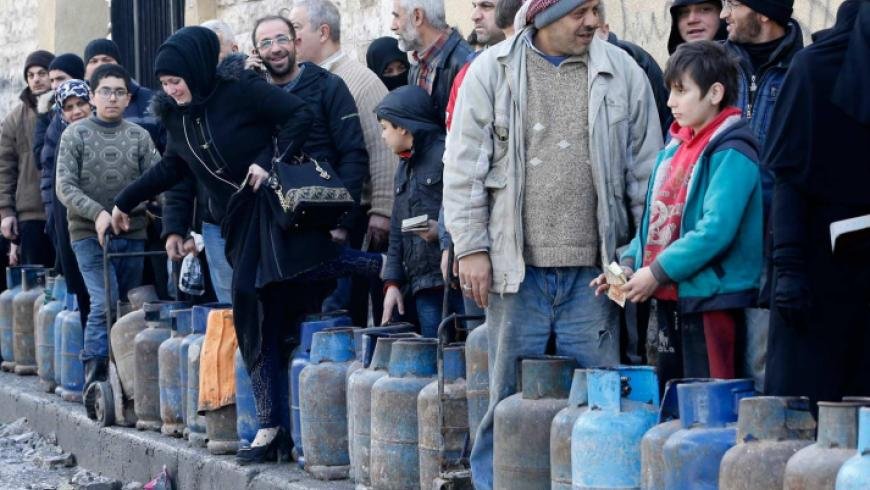
Gas queues return to Damascus and its countryside with the first days of Ramadan… An official price reduction met with a near-total shortage of the product
The Syrian capital, Damascus, and its countryside witnessed, with the arrival of the first days of the holy month of Ramadan, a noticeable escalation in the domestic gas crisis, amid the return of scenes of congestion and waiting lines in front of distribution centers, particularly in the area of Jdeidet Artouz in the countryside of Damascus.
Field sources monitored the worsening of the crisis coinciding with the beginning of the holy month, as residents were forced to wait for long hours to obtain a gas cylinder, in a scene that brought to mind previous crises linked to the “smart card” system during past years.
This comes at a time when the concerned authorities announced a reduction in the price of one kilogram of domestic gas from 50,000 Syrian pounds to 30,000 pounds, yet citizens described the decision as a nominal reduction, confirming that the product has become nearly unavailable in the markets, rendering the announced price practically inapplicable.
A number of residents pointed out that the absence of gas from official distribution centers has driven some to resort to the black market, where cylinders are sold at doubled prices, increasing the living burdens on families, especially amid rising living costs and declining purchasing power.
According to local reports, the crisis has extended to several other Syrian provinces, amid a state of public discontent and questions about the reasons behind the disappearance of the product despite the announced reduction, and the absence of sufficient official clarifications regarding distribution mechanisms or the timing of a resolution to the crisis.
These developments coincide with continued talk about projects and investments in the energy sector, without this being reflected — according to citizens — in the reality of supplies or market stability.
Observers believe that the continuation of the crisis without practical solutions may lead to an escalation of living pressures during the month of Ramadan, at a time when residents are demanding measures that ensure the availability of the product and the actual stability of its prices, away from nominal decisions that do not translate into reality on the ground.