Poverty and division are escalating in Syria amid complaints of job discrimination and declining trust
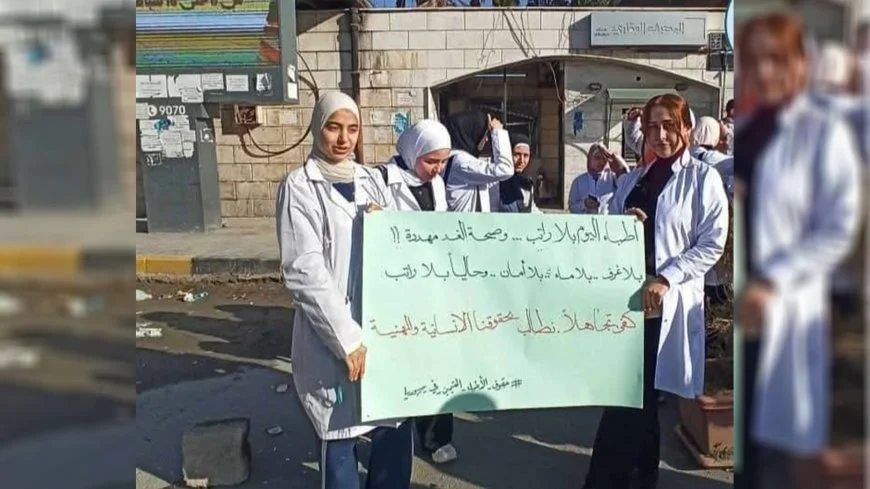
Syrians are facing extremely harsh living and social conditions, amid worsening economic challenges and increasing complaints about policies adopted by the interim government, which observers say have contributed to entrenching job discrimination and weakening wage equity. This has been reflected in rising poverty rates and growing family disintegration and societal division, alongside increasing feelings of fear and declining trust in the capital, Damascus.
The United Nations Development Programme stated that nine out of ten people in Syria live below the poverty line, while one in four suffers from unemployment, indicators that reflect the depth of the country’s economic and social crisis.
In this context, social counselor Jihan Al-Sayyid said that a number of government departments are witnessing cases of employee dismissals and repeated sit-ins, attributing the reasons to a perception of discrimination in salaries between long-serving employees and newly appointed staff. The news agency had reported on February 14 of this month that the management of the “General Company for Cement Industry and Marketing (Omran – Central Region Branch)” in Hama Governorate terminated the services of approximately 75 workers and employees who had been working under temporary annual contracts.
Al-Sayyid added that some newcomers to Damascus and other governorates, who are considered supporters of the current authority, receive salaries in US dollars reaching up to $700, while long-serving employees with extensive experience receive salaries in Syrian pounds equivalent to less than $100, exacerbating the sense of injustice within the workplace environment.
She also pointed to interventions in administrative and personal affairs within some institutions, and the intensification of discussions of a religious nature that have led — according to her description — to divisions within the work environment, including issues related to dress code, preventing gatherings of long-serving employees, canceling break periods, as well as practices she described as “factional” in the management of some public facilities.
On the living side, she explained that the rise in house rents in Damascus is due to increased demand for housing with the growing number of newcomers to the capital, especially those assigned tasks in the institutions of the new authority, which has increased the burdens on families. She also noted that some families hesitate to send their children to the university housing due to fears of tensions within some student circles.
She indicated that the courts in Damascus are witnessing a noticeable increase in divorce requests, attributing this to economic pressures that have contributed to the disintegration of newly formed families as well as others whose marriages have lasted many years.
Al-Sayyid concluded by noting that the current month of Ramadan is considered one of the most difficult in terms of living pressures, with an increasing number of girls and female students resorting to simple jobs to secure their needs, at a time when hotels in the capital are hosting events addressing investment plans directed at the Syrian people, in a scene that reflects the sharp contrast between living realities and the announced economic proposals.