Notable Escalation in Syria: Is ISIS Reorganizing Its Ranks?
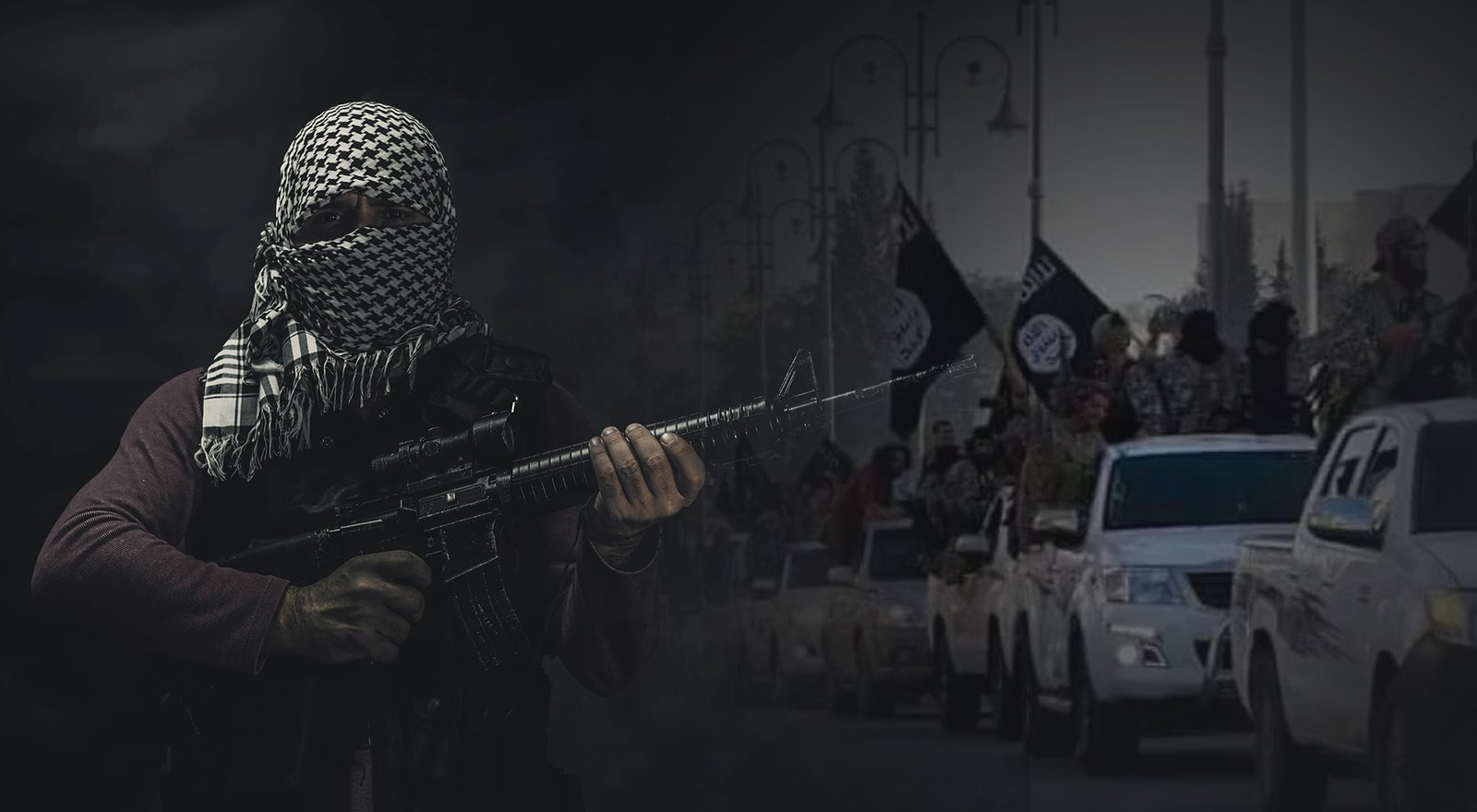
Specialists in extremist movements indicate that the recent escalation in the rhetoric and operations of the so-called Islamic State (Islamic State – ISIS) reflects field and security shifts unfolding in Syria, amid what is described as a security vacuum and a decline in military pressure on the group in certain areas.
Field Escalation and Political Messaging
In recent days, ISIS has claimed responsibility for attacks targeting personnel affiliated with the Syrian transitional government, announcing the beginning of a “new phase” of operations. This declaration is viewed as an attempt to redirect the group’s activities against state institutions and to demonstrate its ability to operate on the ground after a period of relative decline.
The organization announced responsibility for two attacks targeting members of the Syrian army in the north and east of the country, coinciding with the release of an audio recording attributed to its spokesperson, “Abu Hudhayfah al-Ansari.” In the recording, he stated that Syria has moved “from one occupation to another,” referring to what he described as Iranian, Turkish, and American presence.
Security Vacuum and the Diminishing Role of the SDF
Researcher on extremist movements and international terrorism, Monir Adib, believes that the recent developments are linked to field changes, most notably the withdrawal of the Syrian Democratic Forces (Syrian Democratic Forces – SDF) from large areas and their distancing from certain detention facilities holding ISIS members.
Adib stated that “the SDF played a central role in pursuing ISIS elements and securing prisons. With its repositioning in predominantly Kurdish areas, the likelihood of ISIS activity resurfacing in areas such as Raqqa and Deir ez-Zor has increased.”
“Growing Confidence” and an Attempt to Regain the Initiative
Adib considers ISIS’s announcement of a new phase as reflecting “growing confidence in its ability to regain the field initiative,” capitalizing on any security confusion or decline in military coordination against it.
He noted that the nature of the recent attacks, despite their limited scale, signals a return to the “lone wolf” model and small-cell tactics that rely on swift, surprise strikes to disrupt the security landscape.
On February 21, the Syrian Ministry of Defense announced the killing of a soldier and a civilian by “unknown assailants,” an incident occurring within the broader context of escalating security operations in certain areas.
Restructuring and an Attempt to Demonstrate Readiness
According to the researcher, the group’s reference to a “new phase” may indicate internal restructuring and an effort to shift from a defensive posture to more qualitative offensive operations within Syrian territory. The recurrence of operations within a short period suggests a desire to reaffirm presence and demonstrate operational readiness.
Calls have also been observed on accounts and channels affiliated with ISIS on the messaging platform Telegram, urging supporters to intensify attacks using motorcycles and firearms—an indication of attempts to reactivate small cells and mobilize sympathizers.
Observers believe that these developments may reflect an attempt to “reproduce” or reconstitute the organization in Syria, exploiting any security or political vacuum at a time when security challenges continue to cast a shadow over the country’s broader landscape.