Continuing field tensions bring the March 10 Agreement back into question
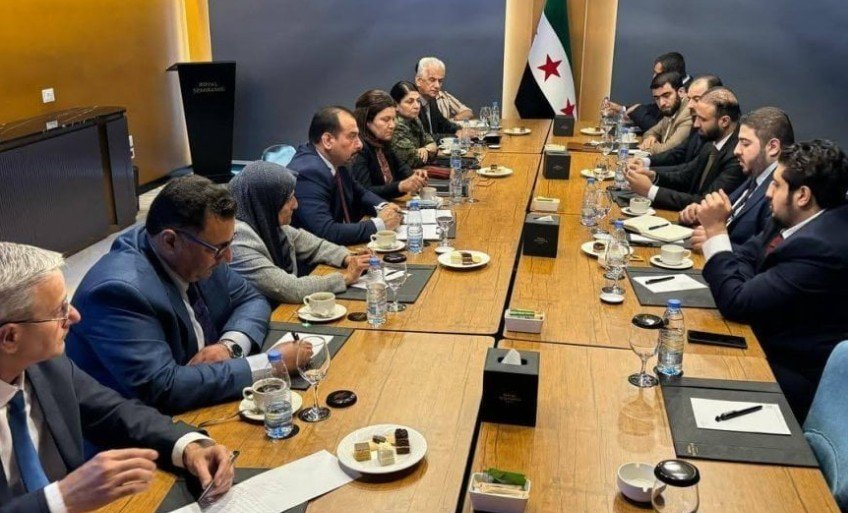
Intersecting field and political indicators suggest that the transitional government in Syria has made little progress in implementing most provisions of the March 10 Agreement, which was signed in Damascus between the head of the transitional government, Ahmad Al-Shar’a, and the General Commander of the Syrian Democratic Forces, Mazloum Abdi, and which includes eight main articles aimed at establishing a framework for a political settlement and comprehensive stability in the country.
According to informed sources, the transitional government has focused in recent weeks on the provision related to integrating the Syrian Democratic Forces into state institutions, without taking clear steps regarding the other provisions related to the political process, the ceasefire, the return of displaced persons, and the promotion of social coexistence. These sources believe that the lack of comprehensive implementation of the remaining provisions has contributed to renewed security tensions in some areas.
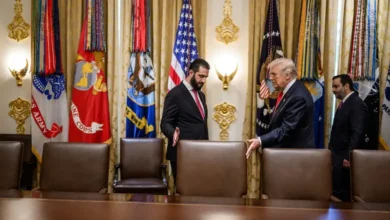
This comes despite the fact that the March 10 Agreement topped international political discussions, including the meeting between U.S. President Donald Trump and the head of the transitional government on October 10, in addition to a trilateral meeting that brought together the foreign ministers of the United States, Turkey, and the transitional government, where the U.S. side stressed the need for full commitment to the provisions of the agreement as an essential step toward Syria’s stability.
Among the key provisions of the agreement are ensuring political participation for all Syrians, recognizing the Kurdish community as an integral component, a comprehensive ceasefire, the integration of civil and military institutions in northern and eastern Syria into state structures, guaranteeing the return of displaced persons, as well as combating terrorism and rejecting hate speech.
On the ground, local reports indicate that the areas of northern and eastern Syria, in addition to the Sheikh Maqsoud and Ashrafieh neighborhoods in Aleppo, have witnessed more than 16 attacks and incidents over the past ten days, some attributed to forces linked to the transitional government and others to ISIS cells in Raqqa, Deir ez-Zor, and Tabqa. These developments indicate a lack of practical commitment to the ceasefire provision included in the agreement.
The Syrian Democratic Forces affirm that they repelled the attacks and continue to “work to protect stability,” while the transitional government has not issued a direct comment on the accusations related to violating the ceasefire.
Meanwhile, thousands of displaced people in shelter centers within the Autonomous Administration areas await their return to their homes, amid the absence of executive measures for the fifth provision of the agreement, which concerns ensuring safe return and protecting residents.
Media materials issued by official and affiliated outlets of the transitional government also indicate the continuation of political rhetoric that contradicts the seventh provision of the agreement, which stipulates rejecting calls for division, rejecting hate speech, and promoting coexistence.
Conversely, institutions of the Autonomous Administration in northern and eastern Syria say they continue to push for the implementation of the agreement “in all its provisions,” considering its application “a fundamental entry point for a comprehensive political solution and for ensuring the unity and stability of the country.”
The coming weeks remain open to further international scrutiny of the fate of the agreement, amid the absence of clear indicators so far regarding implementation mechanisms and the guarantees required to prevent further escalation.