Conditions of Displaced Persons in Syria and the Deterioration of Their Living Circumstances
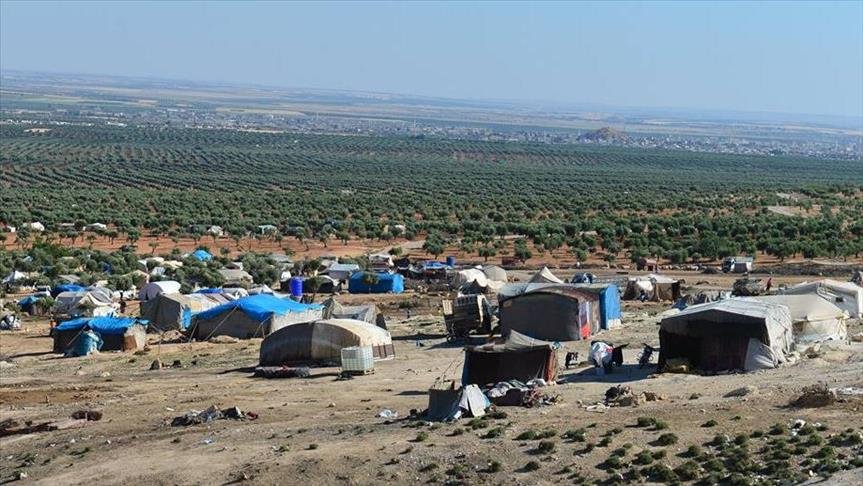
In light of the political and social transformations Syria has witnessed following the fall of Bashar al-Assad’s regime in December 2024, the conditions of internally displaced persons (IDPs) within the country continue to pose a major humanitarian challenge. The number of IDPs is estimated at approximately 6.6 million according to the latest statistics in September 2025, marking a slight decrease from the previous figure (6.7 million) thanks to the return of around 1.3 million displaced persons since January 2024. Additionally, over 730,000 refugees have returned from abroad during the same period. However, these displaced individuals face deteriorating living conditions, hindering the sustainability of their return and placing immense pressure on the already strained infrastructure.
Areas that have witnessed mass displacement, such as Idlib, Aleppo, and Hama, suffer from acute shortages of basic services. Reports indicate that more than 90% of the population, including displaced persons, rely on humanitarian aid to meet their daily needs due to the economic collapse and infrastructure destruction sustained over years of war. Camps and displacement sites, hosting millions, suffer from a lack of clean water and electricity, in addition to poor sanitation, which increases the spread of diseases, especially among children and the elderly. In Northwest Syria, where about 3.4 million displaced persons reside, surveys indicated that 600,000 plan to return within the next six months, but the absence of logistical support hinders these plans.
The crisis is exacerbated by severe damage to homes and properties. Approximately 28% of returnees live in damaged or unfinished buildings, exposing them to risks as winter approaches. War remnants, such as landmines, pose significant security threats, with displaced persons citing their removal as a priority to ensure safe return. Civil and property documents also present an additional obstacle, as many face difficulties proving land ownership, impeding the rehabilitation of affected areas.
The economic situation further complicates the crisis. With the collapse of the Syrian pound and soaring inflation, job opportunities have become nearly nonexistent, pushing displaced persons toward informal, low-wage work. Youth, who constitute a large portion of the displaced population, suffer from a lack of education and vocational training, threatening their future prospects. International organizations, such as the UN High Commissioner for Refugees (UNHCR) and the International Organization for Migration (IOM), have attempted to provide support, but limited funding hampers significant progress. For example, only $71 million out of the required 575 million USD was allocated for return support programs in 2025, potentially leading to a 30% reduction in services.
Despite international efforts, concerns remain about ongoing deterioration. New displacements, resulting from continued clashes in the north and south, have added further pressure, with thousands newly displaced. Neighboring countries, such as Turkey and Lebanon, have played roles in facilitating returns, but logistical and administrative challenges persist. Some reports suggest that returns may be conditional on improvements in infrastructure and job availability; otherwise, returnees may be forced to migrate again.
In conclusion, the conditions of displaced persons in Syria require a comprehensive strategy that includes reconstruction, removal of war remnants, and long-term economic support. While there are hopeful signs with the return of hundreds of thousands, the multiple challenges highlight the necessity for broader international cooperation to ensure a dignified life for those displaced who have endured years of suffering.