Brian Mast at the Center of Congressional Debate Over Repeal of the Caesar Act and Sanctions on Syria
U.S. Special Envoy to Syria Tom Brack sent a letter of appreciation to Republican Congressman Brian Mast, commending his role in ongoing efforts within the U.S. Congress to repeal the Caesar Act, which has imposed sanctions on Syria since 2019.
Mast, who serves as Chairman of the House Foreign Affairs Committee, is considered one of the most influential figures in shaping the outcome of this decision, given his decisive authority to advance or block any amendment to the annual defense bill that includes a proposal for a full repeal of the act.
Although the administration of President Donald Trump supports the repeal, Mast has not yet granted his final approval, making him the last remaining legislative obstacle before the move can be completed.
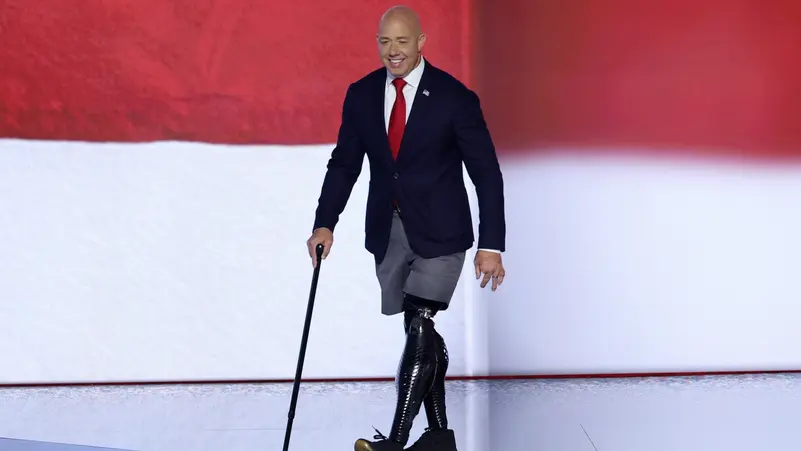
Congressman Brian Mast served in the U.S. Army for 12 years and lost both legs and his left index finger in 2010 after an improvised explosive device detonated during his service in Kandahar, Afghanistan.
In a statement issued Monday, Mast explained that he met with Syria’s transitional government head Ahmad Al-Shar’a ahead of Al-Shar’a’s expected visit to the White House, noting that he directly asked him about the future of relations between the two countries. Al-Shar’a reportedly responded that he “hopes to build a promising future for Syrians and to strengthen relations with the United States.”
Observers believe Mast’s remarks signal a potential softening of his stance on repealing the Caesar Act, paving the way for its passage in Congress.
It is noteworthy that the U.S. State Department yesterday extended the suspension of the Caesar Act’s provisions for an additional six months, following the first suspension in May.
The law, enacted in 2019, aimed to impose sanctions on the Syrian regime for widespread human rights violations. However, its continued enforcement after the fall of the former regime in December 2024 has sparked broad debate over its relevance and its impact on Syria’s economy and citizens’ livelihoods.