The Special Investigation Committee in As-Sweida`a reported-on Tuesday, September 2, 2025, that it has arrested a number of personnel affiliated with the Ministries of Defense and Interior on charges related to committing violations against civilians.
The committee confirmed that the investigations are ongoing with the detainees to uncover details of the cases attributed to them, emphasizing that accountability will include anyone proven to be involved, regardless of their official position.
Author: team.hostinger@protonmail.com
-

The Investigation Committee in As-Sweida`a Announces the Arrest of Members from the Ministries of Defense and Interior on Charges of Committing Violations
-
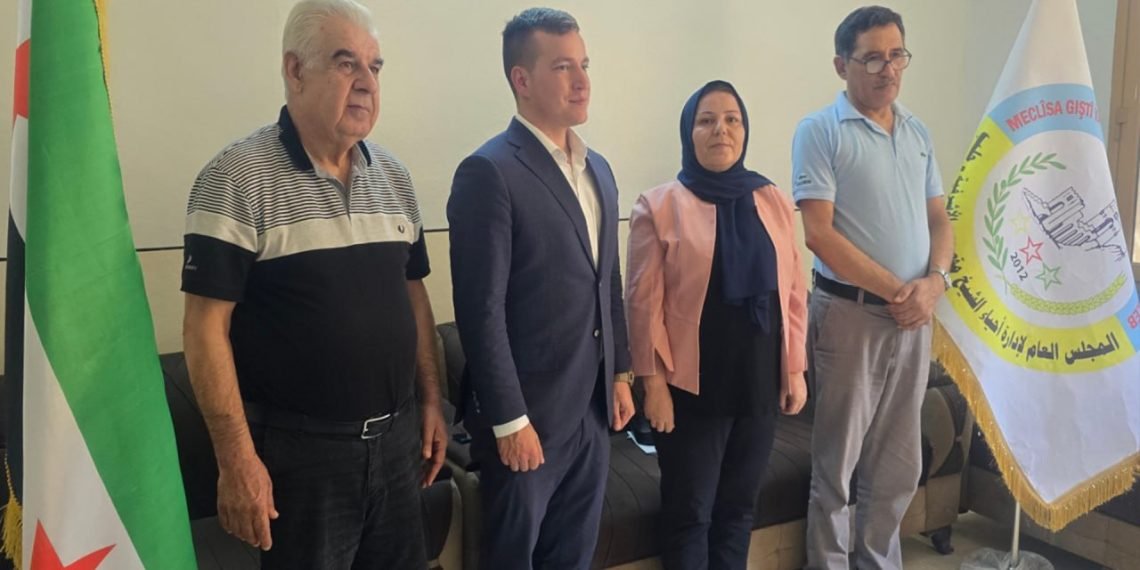
American Delegation Visits Sheikh-Maqsoud and Ashrafieh
Aleppo – An American delegation, including Zak Hoof, The National Security Advisor to the Congressman Abraham Jamal Hamadeh, visited the neighborhoods of Sheikh-Maqsoud and Ashrafieh to hold a series of meetings focused on enhancing the local stability and community engagement.
During meetings with representatives of the general councils of the two neighborhoods, the Syrian Women’s Council, and the Internal Security Forces leadership, ways to consolidate civil peace and develop cooperation mechanisms to improve the living and service conditions for residents were discussed. The discussions also focused on expanding women’s participation in decision-making and preparing future policies in Syria.
The talks also covered mechanisms for implementing the 1st of April agreement between the two councils and the transitional government, which aims to regulate security and administrative cooperation and strengthen stability in the region.
This visit marks the first by an American official of this level to the neighborhoods of Sheikh-Maqsoud and Ashrafieh.
-

As-Suwayda`a in the Heart of Conflict: Files on Recent Clashes and Sectarian Tensions
As-Suwayda`a – Syria
As-Suwayda Governorate, located in southern Syria, has witnessed an unprecedented wave of violence recently, centered around sectarian conflicts and armed clashes between local factions and scattered armed elements. This has occurred amid a security vacuum following the fall of the Assad government in December 2024 and the emergence of a caretaker government led by Ahmad Al-Shara.
Demographic Composition
The Druze constitute about two-thirds of As-Suwayda`a’s population, while the remaining portion is divided among Christian and Bedouin minorities. Despite their Ismaili roots, the Druze do not follow the Quran but rather their own sacred texts known as the “Epistles of Wisdom.” Historically, the Druze played a role in resisting French colonialism, but they did not hold leadership positions in the Syrian government due to Ba’ath Party policies.During Bashar al-Assad’s rule, the Druze community maintained a relatively neutral stance, accepting some government interventions to disperse anti-government protests in 2011. With the civil war, the Druze avoided taking sides and relied on a semi-autonomous local governance, led by three prominent spiritual leaders: Sheikh Hikmat Al-Hajri, Sheikh Yusuf Jarbou’, and Sheikh Hamoud Al-Hanawi.
Developments in the Recent Conflict
Following Assad’s fall, As-Suwayda`a entered a critical phase of violence, which included:- Armed Clashes: Between local Druze factions and Bedouin armed elements, involving heavy weapons and mortar shells, targeting areas such as Sahnaya, Jaramana, ‘A`ara, Lbeen, Kanaker, ‘Urayqa, and Al-Dour.
- Kidnappings and Retaliation: A surge in reciprocal kidnappings among local tribes, resulting in the detention of around 24 individuals within less than 24 hours.
- Field Killings and Executions: Dozens of Druze civilians and fighters were killed, including local figures and religious men, according to local sources and the Syrian Observatory for Human Rights.
As-Suwayda`a Military Council
In February 2025, the As-Suwayda Military Council was announced, comprising Druze factions, most notably the Men of Dignity Movement/Harakat Rijal Al-Karama linked to Sheikh Hikmat Al-Hajri, aiming to ensure stability and security within the governorate amid speculation about its ties to the Syrian Democratic Forces (SDF).Humanitarian and Civil Situation
- The clashes resulted in more than 170 dead and wounded, including civilians, with reports of torture and arbitrary arrests.
- Some villages were raided and properties burned, in addition to the complete targeting of a Druze religious shrine.
- Local hospitals received dozens of wounded, some in critical condition, amidst a clear shortage of medical and relief services.
International and Local Position
- France and the United States called for an end to the violence, protection of civilians, and accountability for perpetrators.
- The local government and As-Suwayda`a governorate reached preliminary ceasefire agreements, which included releasing hostages and deploying local security personnel.
- Israel army announced limited air sorties to ensure the Druze were not targeted, while rejecting direct ground intervention.
Conclusion
The situation in As-Suwayda`a remains fragile, with ongoing incidents of violence and kidnappings and threats of renewed clashes in the western and northern countryside. The Local and religious leaders calls for restraint and opening channels of dialogue, while the international community closely monitors the humanitarian and security developments in the governorate. -
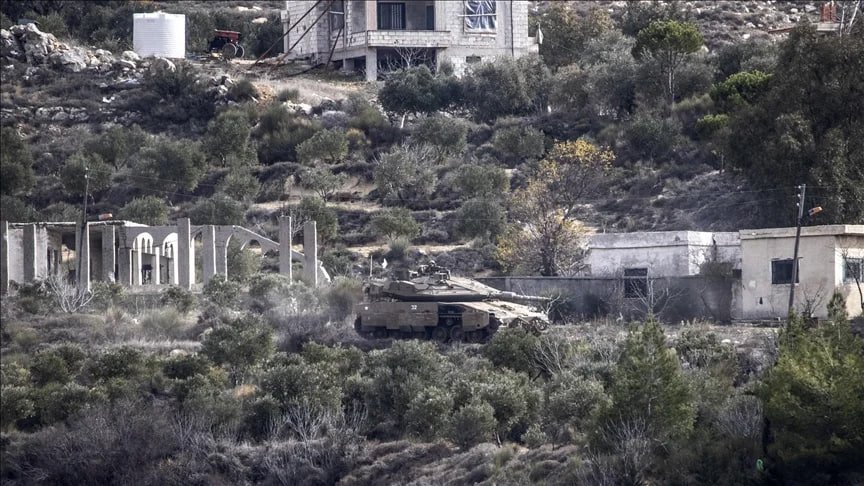
Al-Quneitra governorate/ Syria: Israeli Patrol Enters Southern Countryside in a Limited Manner
This morning, the southern countryside of Quneitra witnessed a limited incursion by an Israeli patrol toward the Junction in the Sieda Al-Golan town, near the border with the occupied Golan Heights, and in proximity to the administrative boundary of Daraa Governorate within the Hawd Al-Yarmouk area.
According to local sources, Israeli military vehicles deployed at the site and set up a temporary checkpoint on the road before retreating approximately an hour later.
Which The Syrian Observatory had documented a similar incursion by an Israeli force in the northern countryside of Quneitra two days ago, which involved setting up a checkpoint at the entrance of Jabbata Al-Khashab town and carrying out raids and searches in civilians’ homes.
These military movements have caused anxiety among the residents, coinciding with escalating tensions along the contact lines in southern Syria.
-
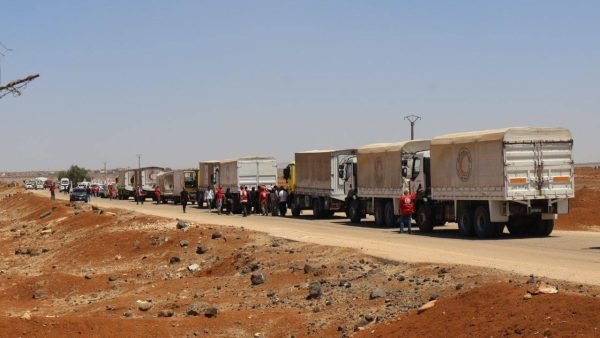
The United Nations Enhances Its Support to As-Suwayda`a with a New Relief Convoy
On Tuesday morning, the third relief convoy from the United Nations/WFP entered As-Suwayda`a. The convoy consisted of 22 trucks accompanied by a UN delegation, via the Damascus–As-Suwayda`a highway.
The arrival of this convoy comes amid the ongoing living crisis and shortage of basic supplies, alongside preparations to send a fuel shipment to meet part of the population’s needs.
The first convoy had entered through the Busra al-Sham crossing before it was closed, while the second took the Damascus–As-Suwayda`a route, which has now become the only passage currently available for civilians and relief convoys after movement through the crossing was halted.
As it is noteworthy that the World Food Programme announced last week an urgent response plan in southern Syria, aiming to deliver food assistance to the residents of As-Suwayda`a and the families that affected by recent developments.
-
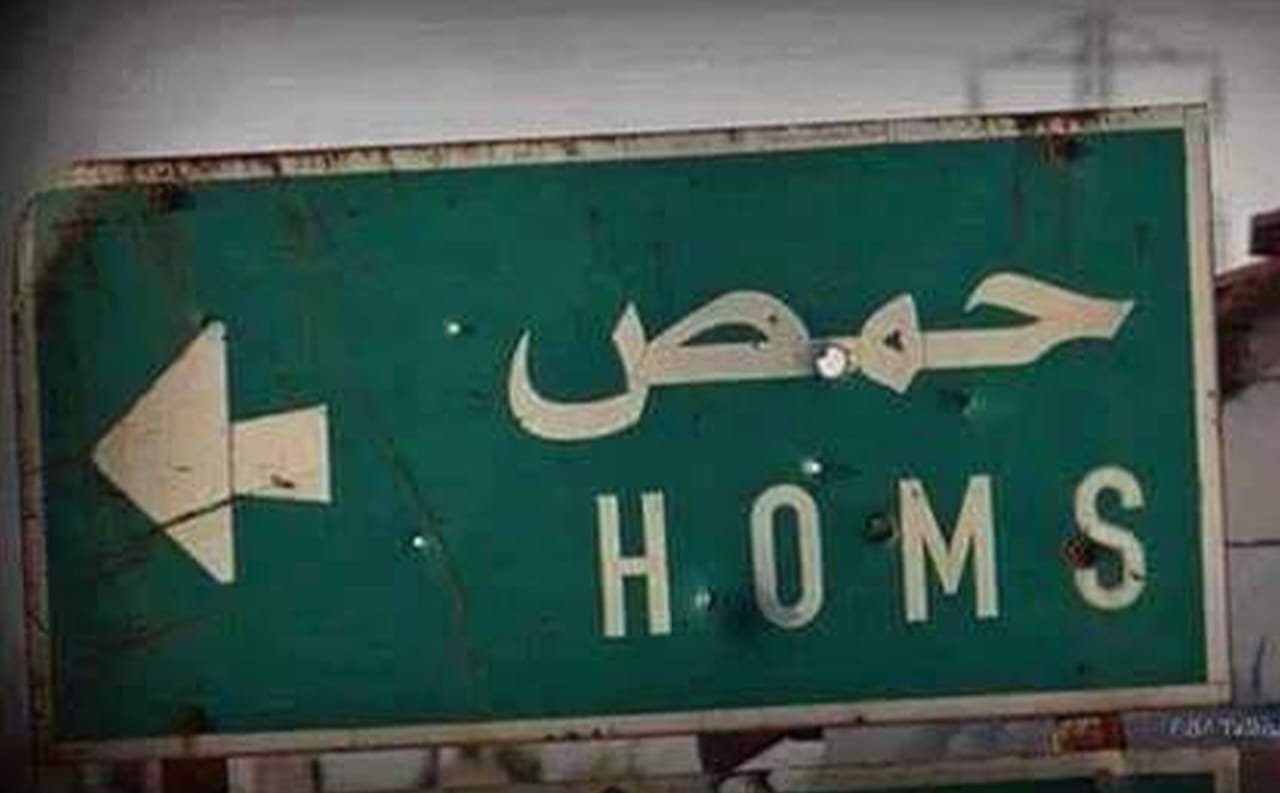
Finding the Body of a Young Man in Homs after His Arrest… and an Unknown Fate Haunts Two of His Relatives
Homs Governorate – The Syrian Observatory for Human Rights reported the discovery of the body of a young man from the village of Buwayda Al-Salamiyah, east of Homs, about a month after he disappeared following his arrest at a checkpoint in the Ain Al-Nasir area.
According to the Observatory, the young man was with his brother and cousin when they were stopped earlier this year, while the fate of the other two remains unknown to this day. Information added that the deceased’s body was found at Al-Waleed Hospital, and it was confirmed that he had been shot in the head before being buried in Al-Nassar Cemetery. Meanwhile, the vehicle they were using was confiscated by the Political Security apparatus.
According to the Observatory’s statistics, the number of victims killed in liquidation operations or for revenge motives since the beginning of 2025in various Syrian areas has reached 995 people, including 942 men, 32 women, and 21 children. They are distributed as follows:
- Damascus: 48 (47 men, 1 woman), including 25 due to sectarian affiliations.
- Rural Damascus: 92 (90 men, 2 women), including 18 due to sectarian affiliations.
- Homs: 326 (300 men, 17 women, 9 children), including 198 for sectarian motives.
- Hama: 205 (194 men, 7 women, 4 children), including 131 due to sectarian affiliations.
- Latakia: 95 (85 men, 4 women, 6 children), including 73 for sectarian motives.
- Aleppo: 83 (83 men), including 3 for sectarian motives.
- Tartous: 70 (68 men, 1 woman, 1 child), including 54 due to sectarian affiliations.
- Idlib: 19 (19 men), with no recorded cases due to sectarian motives.
- As-Suwayda: 5 (5 men), including 3 for sectarian motives.
- Daraa: 43 (42 men, 1 child).
- Deir ez-Zor: 9 (9 men).
-
“The United Nations Expresses Deep Concern Over Developments in Al-Sumariyah Neighborhood, Damascus”
Damascus, September 1, 2025 – The United Nations has expressed deep concern over the unfolding situation in the Al-Sumariyah neighborhood of western Damascus, where reports persist of threats of forced eviction and serious human rights violations against innocent civilians, including women and children.
In an official statement, the UN spokesperson confirmed that the organization’s special envoy to Syria is closely monitoring the events, warning that these violations could undermine efforts to establish justice and the rule of law.
The crisis commenced in late August when an armed group stormed the neighborhood, conducting raids on residents’ homes, confiscating property documents, and arresting young men, while also intimidating residents and searching their phones. Some residents were coerced into recording videos pledging to vacate their homes within 72 hours, sparking fears of widespread sectarian displacement, particularly given the neighborhood’s informal settlements, which are claimed by landowners from nearby Al-Madamiya.
In response to the escalating situation, the majority of residents have evacuated their homes due to fear, and the neighborhood’s entrances have been closed with a curfew imposed.
The United Nations urges all parties to exercise restraint and refrain from hasty or violent actions, emphasizing the imperative to protect civilians in accordance with international humanitarian standards and to address housing issues with sensitivity to prevent further escalation of sectarian tensions in Syria.
-
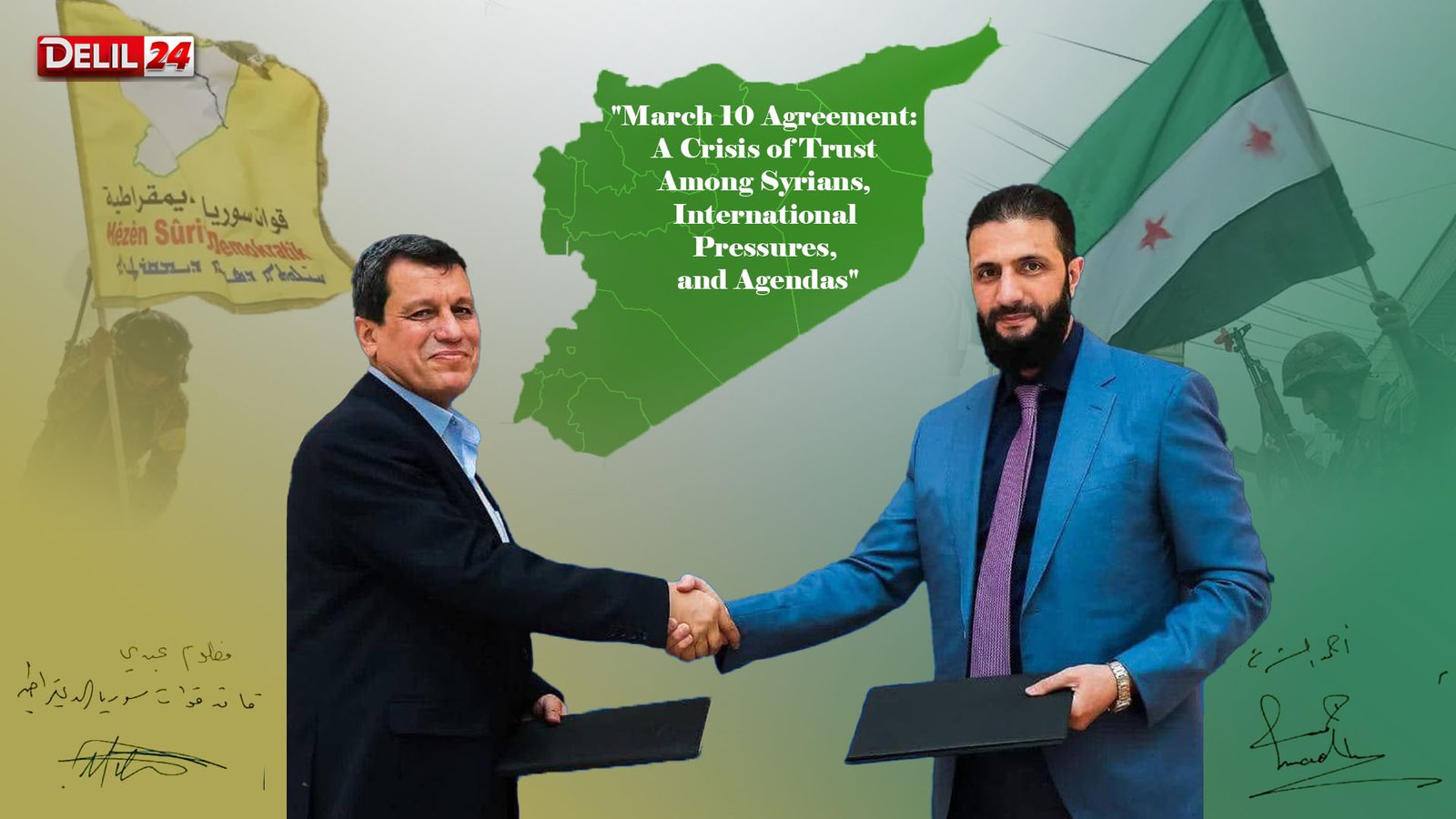
“March 10 Agreement: A Crisis of Trust Among Syrians, International Pressures, and Agendas”
years of internal conflict and foreign interventions, and with the fall of the Assad regime, the Syrian parties began to realize the necessity of reaching a comprehensive political settlement. International and regional pressures, in addition to military changes on the ground, pushed the parties towards dialogue.
The Self-Management, which holds autonomy in northeastern Syria, sought to secure Kurdish rights and stabilize its regions through a decentralized system. Meanwhile, the Syrian Interim Government aimed to restore its sovereignty over all Syrian territory.
In this context, the March 10 Agreement represents a significant political event. It was concluded between the Syrian Interim Government and the Syrian Democratic Forces (SDF), emerging amid major political and security shifts. It is considered an important step toward rearranging the internal Syrian scene. The eight clauses of the agreement emphasize:
- Ensuring the rights of all Syrians to represent and participate in the political process and state institutions without religious or ethnic discrimination.
- Recognizing the Kurdish community as an integral part of the Syrian state and guaranteeing their constitutional rights.
- A ceasefire across all Syrian territories.
- Integrating civilian and military institutions in northeastern Syria into the management of the Syrian state, including crossings, airports, oil and gas fields.
- Ensuring the return of displaced Syrians to their areas and providing protection for them.
- Supporting the state in combating remnants of the previous regime and all threats to Syria’s security and unity.
- Rejecting calls for division, hate speech, and attempts to incite discord among the components of Syrian society.
- Confirming that executive committees are responsible for implementing the agreement by the end of 2025.
More than five months after the agreement was signed, several steps have been taken, such as the formation of an executive committee that held its first meeting in Hasakah to discuss implementation mechanisms. A delegation from the Self-Management also held several rounds of talks in Damascus to continue the agreement. A significant outcome of the agreement was the ceasefire across all Syrian territories, including Al-Sheikh Maqsoud and Ashrafiya neighborhoods in Aleppo. This was followed by the withdrawal of the SDF from the two Kurdish neighborhoods in Aleppo, a reduction in military representation, the release of the first batch of 450 detainees from both sides, the closure of certain prisons, and the establishment of joint security centers between the SDF and security agencies in Aleppo.
Reasons for the halt or delay
Subsequent political events, such as the announcement of the constitutional declaration, the appointment of an interim government, military operations on the Syrian coast against Alawites, and attacks on Druze in Suwayda`a, as well as the People’s Assembly elections, led to the Self-Management’s rejection and delayed the agreement’s progress between the two parties. The reasons for this delay can be summarized as follows:
Disagreement over the interpretation of the integration of institutions clause. Damascus views integration as a final solution and a return to a centralized system, while the Self-Management believes in coordination while maintaining some powers within a decentralized system.
As so, the intervention of regional and international powers, particularly Turkey, which is pressuring the Interim Government and closely monitoring the agreement, has been a significant reason in the agreement’s progress. Which also the military friction between the two sides in Deir ez-Zor and eastern Aleppo also plays a role.
The Current Reality and Future Political Analyses
As the end of the current year approaches and with no indication of the implementation of the agreement, the current reality can be defined by several points:
Crisis of trust and fragility of relations and mutual doubts between the parties pose a major challenge to the sustainability of the agreement. As the differences in interpreting the clauses and the dispute over the integration of civil and military institutions may halt the implementation or bring disputes back to the forefront.
The regional and international interventions: The support or pressure from the guarantor states as (Turkey, the United States, Russia, the European Union) will affect the stability of the agreement.
The importance of gradual implementation: Gradual progress in sensitive issues such as education, security, and detainees strengthen the chances of success for the agreement.
As the possible future scenarios remain wide open: either optimism and gradual resolution of disputes, continued executive meetings, and international support, leading to overall de-escalation and possibly broader constitutional negotiations. or hardline positions and continued fundamental disagreements, with the intervention of regional powers, partially halting implementation and resuming military friction. or stagnation through partial implementation of some clauses, while major issues remain unresolved, maintaining a fragile stability without tangible progress.
What is required from both parties to ensure the success of the agreement?
Many of the policies pursued by the Syrian Interim Government have faced international and local rejection, such as the failure to involve all parties in the transitional phase and its policy of exclusion, as others describe it, which weakens its position both internationally and locally. The government must commit to an inclusive interpretation of the clauses, provide security guarantees for the northern and eastern regions, facilitate the voluntary return of displaced persons, especially those from Afrin and Ras al-Ain, and move away from a centralized approach in governing the country.
And Both parties must commit to the executive committees and follow up on the implementation of the agreement, avoiding media or military escalation, involving the international community and the guarantor states to support the implementation, and applying measurable gradual steps to build trust progressively.
The implementation of the March 10 Agreement represents a rare opportunity to achieve political and security stability in Syria through a ceasefire, coordinating civilian and security institutions, building trust between the Syrian Interim Government and the Self-Management, ensuring the rights of all Syrians and different components, including the Kurdish community, and also protecting cultural and religious diversity, achieving justice and national reconciliation through the return of displaced people and the release of detainees, improving public services, and paving the way for broader constitutional negotiations, This makes it a crucial step toward a stable and peaceful future for Syria.
Siamaand Ahmad
-
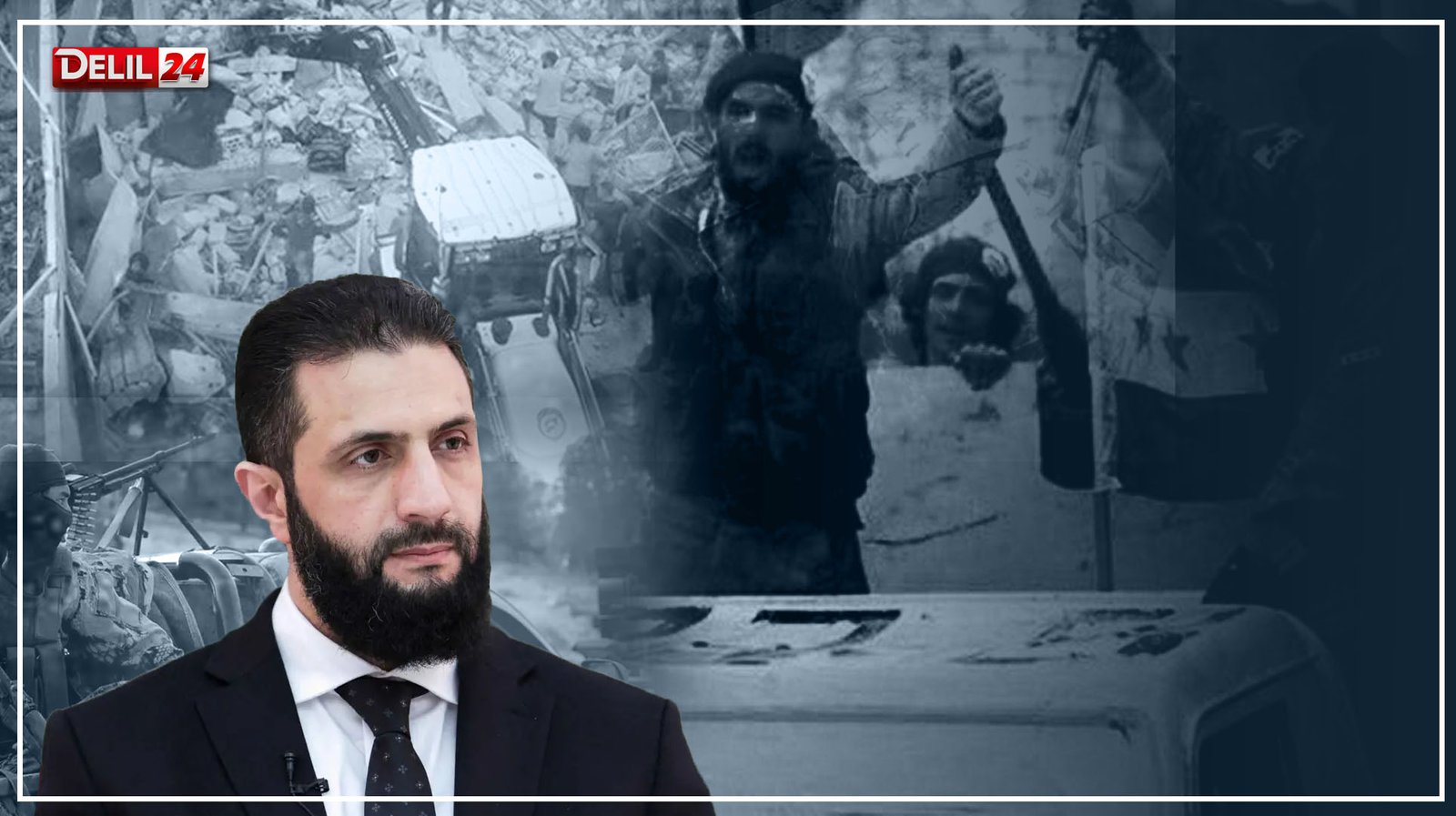
After the fall of Bashar al-Assad’s regime in Syria in late 2024, the country witnessed an unprecedented
After the fall of Bashar al-Assad’s regime in Syria in late 2024, the country witnessed an unprecedented wave of violence and bloodshed, including infighting, kidnappings, and killings, sectarian and ethnic conflicts, a nearly destroyed economy, and an unorganized and undisciplined army that includes foreigners and extremists Jihidsts. This was accompanied by international interventions in Syria and airstrikes targeting military bases.
After the events in the coastal region and the massacres that witnessed killing and persecution of the Alawite sect, the Damascus government set its sights on Sweida, where it deployed tribal elements and army personnel in tribal attire to storm Sweida, which resulted in tens of thousands of displaced and besieged people and bloody massacres on a sectarian basis. This prompted Israel to launch airstrikes on July 16 targeting military and government headquarters in Damascus, near Umayyad Square, resulting in the death of 3 people and injuring 34 others. This was a clear response to the Syrian government’s military presence in the south.
Despite the ceasefire brokered by international mediators on July 20, the United Nations warns of the collapse of the truce due to repeated threats and violations. The severe shortage of basic medicines, energy, and food due to the imposed siege has led the people of Sweida to declare a semi-autonomous administration and stage demonstrations demanding separation from Syria due to the crimes committed against them.
On August 25, interim President Ahmed al-Sharah met with US envoy Thomas Barrack to push for a comprehensive settlement, particularly regarding security tensions in southern Syria and developing regional cooperation between Syria and Israel through US mediation. Despite reports in Western and Arab media of progress in negotiations between the Syrian government and Israel, Israeli media outlets denied this and stated that the talks were limited to security understandings only.
In parallel with the ceasefire statements and Israeli airstrikes, the complexity of the situation is still in its early stages. In northern and eastern Syria, the Autonomous Administration seeks to integrate based on the Abdi-Sarah agreement, but obstacles remain, including the Syrian government’s rejection of decentralization and Turkey’s intervention to obstruct negotiations between the Syrian Democratic Forces and the Syrian government.
In northwest Syria, which is controlled by Turkey through pro-Turkish factions, Turkey seeks to expand its influence further in Syria, particularly in the coastal region, where reports indicate that it has deployed Alawite families from Turkey to the Syrian coast to create sectarian ties and gain their support. Israel has rejected this and carried out a missile strike on the 107th Brigade in Jableh.
In the midst of this complex situation, a new political body known as the Political Council for Central and Western Syria has been announced, which will represent the Alawite sect politically and advocate for a democratic, decentralized Syria with federalism for the regions.
Today, Syria is not a single entity, but rather consists of approximately 5 regions: the Hayat Tahrir al-Sham (Damascus government), the Syrian Democratic Forces in northeastern Syria, the southern Syrian region, and the Syrian coast represented by the Political Council for Central and Western Syria.
What is certain, despite the complexity of the scene on the Syrian political scene and the military distribution, is that if Damascus continues with its current mentality in managing the scene and dealing with the rest of Syria’s components, the cycle of violence will continue. However, the international community has reached the conviction that Syria cannot be governed by a centralized administration, given the massacres witnessed by the coast and Sweida governorate, and what is confirmed by the statement of US envoy Tom Barrack that the system of governance in Syria may soon be close to federalism.
-

From the heart of Syrian chaos
From the heart of Syrian chaos, and amidst the intertwined voices, we choose to be an independent voice that monitors events without embellishment and conveys the truth without fear. We will not be a mouthpiece for any authority, nor a mirror for any party, but rather a journalistic conscience that holds accountable, questions, and reveals. Syria deserves a free, transparent, and faithful media that reflects its suffering.