After the fall of Bashar al-Assad’s regime in Syria in late 2024, the country witnessed an unprecedented

After the fall of Bashar al-Assad’s regime in Syria in late 2024, the country witnessed an unprecedented wave of violence and bloodshed, including infighting, kidnappings, and killings, sectarian and ethnic conflicts, a nearly destroyed economy, and an unorganized and undisciplined army that includes foreigners and extremists Jihidsts. This was accompanied by international interventions in Syria and airstrikes targeting military bases.
After the events in the coastal region and the massacres that witnessed killing and persecution of the Alawite sect, the Damascus government set its sights on Sweida, where it deployed tribal elements and army personnel in tribal attire to storm Sweida, which resulted in tens of thousands of displaced and besieged people and bloody massacres on a sectarian basis. This prompted Israel to launch airstrikes on July 16 targeting military and government headquarters in Damascus, near Umayyad Square, resulting in the death of 3 people and injuring 34 others. This was a clear response to the Syrian government’s military presence in the south.
Despite the ceasefire brokered by international mediators on July 20, the United Nations warns of the collapse of the truce due to repeated threats and violations. The severe shortage of basic medicines, energy, and food due to the imposed siege has led the people of Sweida to declare a semi-autonomous administration and stage demonstrations demanding separation from Syria due to the crimes committed against them.
On August 25, interim President Ahmed al-Sharah met with US envoy Thomas Barrack to push for a comprehensive settlement, particularly regarding security tensions in southern Syria and developing regional cooperation between Syria and Israel through US mediation. Despite reports in Western and Arab media of progress in negotiations between the Syrian government and Israel, Israeli media outlets denied this and stated that the talks were limited to security understandings only.
In parallel with the ceasefire statements and Israeli airstrikes, the complexity of the situation is still in its early stages. In northern and eastern Syria, the Autonomous Administration seeks to integrate based on the Abdi-Sarah agreement, but obstacles remain, including the Syrian government’s rejection of decentralization and Turkey’s intervention to obstruct negotiations between the Syrian Democratic Forces and the Syrian government.
In northwest Syria, which is controlled by Turkey through pro-Turkish factions, Turkey seeks to expand its influence further in Syria, particularly in the coastal region, where reports indicate that it has deployed Alawite families from Turkey to the Syrian coast to create sectarian ties and gain their support. Israel has rejected this and carried out a missile strike on the 107th Brigade in Jableh.
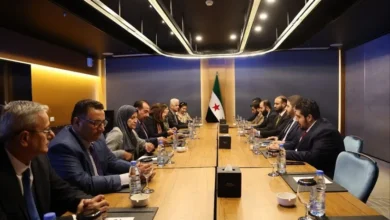
In the midst of this complex situation, a new political body known as the Political Council for Central and Western Syria has been announced, which will represent the Alawite sect politically and advocate for a democratic, decentralized Syria with federalism for the regions.
Today, Syria is not a single entity, but rather consists of approximately 5 regions: the Hayat Tahrir al-Sham (Damascus government), the Syrian Democratic Forces in northeastern Syria, the southern Syrian region, and the Syrian coast represented by the Political Council for Central and Western Syria.
What is certain, despite the complexity of the scene on the Syrian political scene and the military distribution, is that if Damascus continues with its current mentality in managing the scene and dealing with the rest of Syria’s components, the cycle of violence will continue. However, the international community has reached the conviction that Syria cannot be governed by a centralized administration, given the massacres witnessed by the coast and Sweida governorate, and what is confirmed by the statement of US envoy Tom Barrack that the system of governance in Syria may soon be close to federalism.