SDF–Transitional Government Agreement Enters into Force in Northern and Eastern Syria
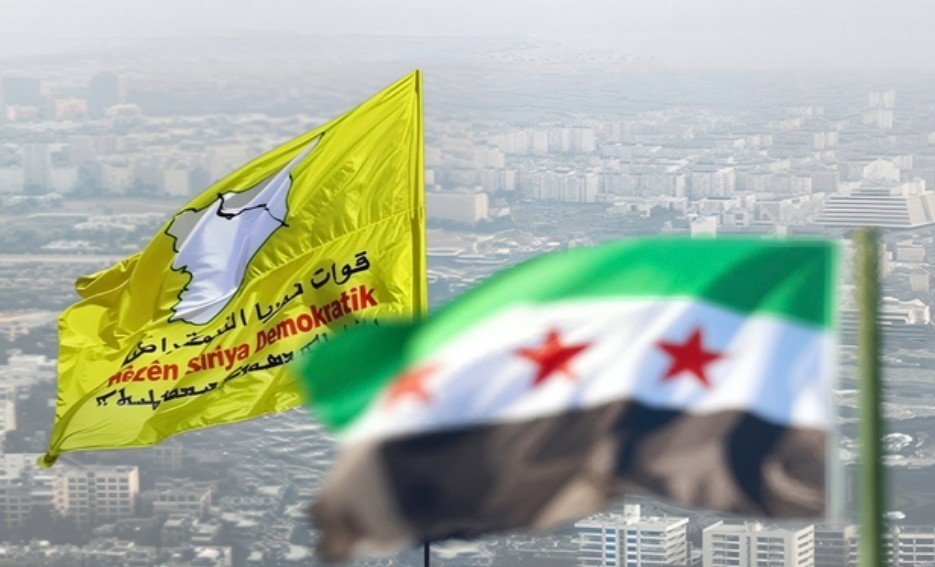
The agreement signed on January 29 between the Syrian Democratic Forces (SDF) and the Syrian Transitional Government has entered into practical implementation on the ground, with rapidly unfolding field developments recorded in al-Hasakah and Kobani. These included coordinated security deployments, administrative and military meetings, and the official assumption of duties by the Governor of al-Hasakah.
On January 30, the two parties announced that they had reached a comprehensive agreement stipulating a ceasefire and the launch of a gradual integration process for military and security forces and administrative institutions. This includes the withdrawal of forces from contact lines, the deployment of security forces in the centers of al-Hasakah and Qamishli, the formation of new military units, as well as the integration of Autonomous Administration institutions and the regularization of employees.
The agreement also included the settlement of civil and educational rights for Kurds and guarantees for the return of displaced persons, within the framework of efforts to unify Syrian territory, enhance stability, and advance reconstruction.
Security Coordination and Joint Deployment
With the beginning of February, field steps to implement the agreement accelerated. On February 1, a coordination meeting was held away from the media between the al-Hasakah security commander appointed by the Transitional Government, Marwan al-Ali, and leaders of the Internal Security Forces in Northern and Eastern Syria. The meeting took place in two separate sessions in the cities of al-Hasakah and Qamishli, with the participation of Internal Security Forces leader Mahmoud Khalil Ali, known as “Siamand Afrin.”
On February 2, security forces affiliated with the Transitional Government entered the countryside of Kobani, where they were stationed at points predetermined in coordination with the Internal Security Forces of the Autonomous Administration. This step was considered an indication of the beginning of joint work on the security file. On the same day, the city of al-Hasakah witnessed a coordinated entry of Transitional Government security forces in cooperation with the Internal Security Forces.
These steps continued on February 3, with a similar entry of Transitional Government security forces into the city of Qamishli, within the framework of joint security coordination between the two sides.
Administrative Activity and Official Meetings
On the administrative level, on February 5, the SDF-nominated candidate returned from Damascus following his appointment as Governor of al-Hasakah, where he was welcomed by residents of the city. This scene was considered an indication of moving forward with restructuring administrative bodies in parallel with ongoing understandings.
On the same day, a delegation from the Democratic Autonomous Administration in Kobani held a meeting at the Aleppo Governorate building. The meeting included the Internal Security Commander in Aleppo Governorate, Colonel Mohammad Abdel Ghani, the Deputy Governor of Aleppo, Ali Hanoura, and a number of officials from security forces affiliated with the Transitional Government.
The Autonomous Administration delegation included the Head of the Executive Council of the Autonomous Administration, Farhan Haj Issa, along with representatives of civil institutions and organizations in the city of Kobani, and notables from Arab tribes. Discussions focused on regional issues and mechanisms for implementing the agreement’s provisions in a manner that supports stability and strengthens institutional coordination.
Military Track and Gradual Integration
Within the military track, the city of al-Hasakah hosted a meeting on February 6 that brought together leaders from the Syrian Democratic Forces, headed by SDF General Command member Chiya Kobani, and leaders from Transitional Government factions headed by Hamza al-Hamidi. The meeting was dedicated to discussing stages and mechanisms of military integration.
The meeting was followed by a joint field tour that included several SDF positions, which—according to sources—are scheduled to be transformed into permanent bases for the three brigades planned to be formed in al-Hasakah and its countryside.
Indicators of Consolidating the Understandings
Following the official assumption of his duties by al-Hasakah Governor Nour al-Din Issa, he was visited by the al-Hasakah security commander appointed by the Transitional Government, Marwan al-Ali, who congratulated him on his appointment.
Overall, these steps—from joint security deployment to political and military meetings—indicate that the implementation of the agreement is proceeding along parallel tracks encompassing security, administrative, and military aspects, in an attempt to build a gradual model of joint action.
Observers believe that the rapid pace of implementation over the course of just a few days reflects a clear orientation toward consolidating the understandings on the ground, paving the way for a phase that may witness an expansion of integration files and institutional management, despite the persistence of several unresolved issues. These include the siege imposed on the city of Kobani, the continued Turkish occupation of Kurdish areas, and the deprivation of displaced persons from returning to them.