The Syrian Golan Disappears from Maps… A Silent Squandering of Land and National Memory
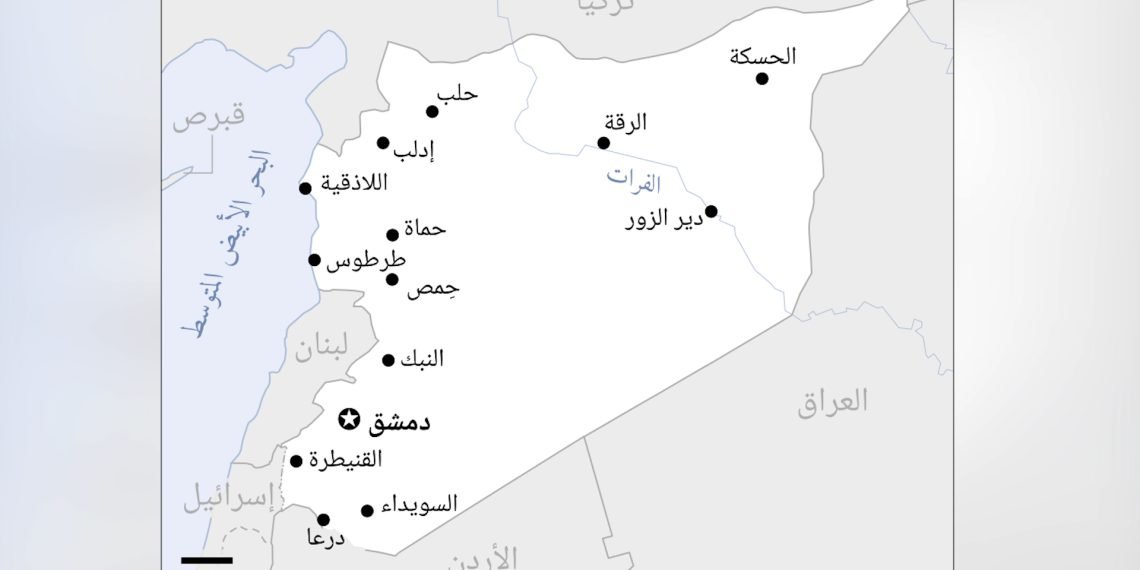
The omission of the Syrian Golan Heights from some officially circulated maps recently has sparked widespread concern and political and legal debate, amid official silence that observers have considered an alarming indicator of a retreat in dealing with one of the most sensitive sovereignty issues in Syria, and the risks this entails of squandering land and national memory.
The removal of the Golan from official maps in the recent period has opened the door to questions about the implications of this step, in the absence of any clarification from the relevant authorities. This has led many to view the matter as going beyond a technical or administrative dimension, and as a reflection of a dangerous political shift in the approach to the occupation file.
In this context, Syrian writer Diaa Iskandar addressed the issue in an article in which he stated that the Golan, occupied since 1967, is an integral part of Syrian territory under international law, affirming that UN Security Council resolutions have deemed Israel’s declaration of annexation of the plateau null and void. He considered that the omission of the Golan from official maps carries clear political connotations and cannot be separated from a broader context of reordering priorities.
Iskandar pointed out that official maps are sovereign documents that express the state’s position on its borders and occupied territories, warning that excluding the Golan from them opens the door to normalizing loss and erasing national memory, and grants Israel political gains it failed to impose through military conflict.
The writer also addressed the nature of the current transitional government, considering that it was formed without popular mandate and does not, according to international norms, possess the authority to take steps that affect decisive sovereign issues, such as occupied territories or border demarcation. He argued that the official silence regarding the omission of the Golan reflects a reordering of priorities that places the survival of power and external support above national constants, something that may be read by Israel as a sign of weakness, and internationally as implicit acceptance of the status quo.
At the same time, Iskandar stressed that these developments do not absolve the former Syrian regime of its historical responsibility for failing to recover the Golan over decades, and the accompanying policies that weakened the state, exhausted it internally, and made sovereign issues more vulnerable to marginalization.
The writer concludes that omitting the Golan from some maps does not change a firmly established legal reality: the plateau remains occupied Syrian land under international law, its right is not nullified by silence or by the passage of time, and it remains present in the national memory regardless of changes in authority or shifts in political priorities.