Florida Meeting: Israeli Efforts to Secure U.S. Support for Military Options Against Iran and Hezbollah
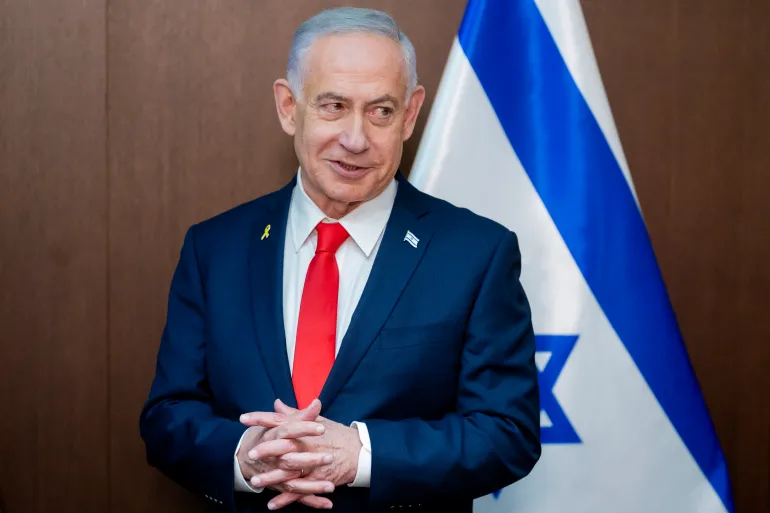
The Israeli Public Broadcasting Corporation reported on Sunday that Israeli Prime Minister Benjamin Netanyahu intends to seek what it described as a “green light” from the United States to launch a potential future attack on Iran, during his anticipated meeting with U.S. President Donald Trump.
Agence France-Presse quoted an Israeli official as saying that Netanyahu headed to the United States and is scheduled to meet Trump in the state of Florida the following day. According to the Israeli Public Broadcasting Corporation, Netanyahu is expected to present the U.S. president with what he said were pieces of evidence indicating Iran’s progress in reviving its ballistic missile program.
In the same context, Israel’s Channel 14 reported that Israel believes the Iranian threat is increasing, although current assessments do not point to the outbreak of an imminent conflict with Iran. The channel added that Netanyahu will also seek U.S. approval for a potential military action against Hezbollah in Lebanon.
According to Israeli sources, Netanyahu intends to provide Trump with updated intelligence information indicating that Iran is producing large quantities of ballistic missiles capable of reaching Israel. The newspaper Yedioth Ahronoth quoted an unnamed Israeli official as saying that the failure of the United States to reach an agreement with Iran that would halt its missile program could make confrontation a possible option, while noting a preference for reaching a diplomatic solution.
In contrast, Iran announced this week that its ballistic missile program is “non-negotiable.” Iranian Foreign Ministry spokesperson Esmail Baghaei said that these missiles are intended for self-defense and deterrence purposes.
The Israeli official described Iran’s missile buildup as posing a serious threat, considering that a massive launch could cause significant damage. Previous assessments published by The Wall Street Journal indicated that Iran could be capable of producing hundreds of missiles per month if its facilities were operating at full capacity.
It is worth noting that Israel carried out airstrikes last June on Iranian military and nuclear sites, to which Tehran responded with drone and missile attacks, before the United States later joined Israel and bombed Iranian nuclear facilities, in a war that lasted 12 days.