Mazloum Abdi: Dialogue Is the Path to a Solution in Syria and to Prevent the Return of Centralization
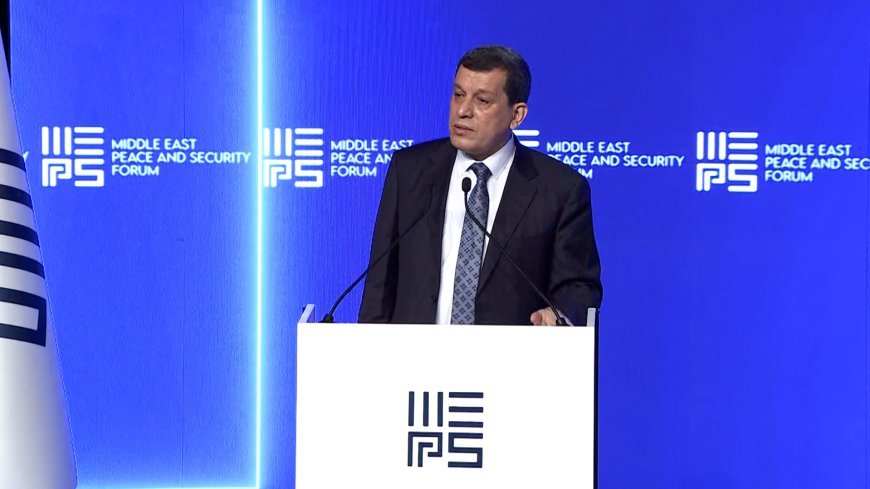
The General Commander of the Syrian Democratic Forces, Mazloum Abdi, affirmed during his participation in the Middle East Peace and Security Forum (MEPS 2025) in Duhok that dialogue constitutes the only path to achieving a political solution in Syria. He noted that the Autonomous Administration of North and East Syria is committed to implementing the March 10 Agreement. He added that there has been progress on military and security files with the transitional government, while calling for a Kurdish and regional role to support the dialogue process and prevent the return of centralization in Syria.
Abdi stated that the country has reached a point where war is no longer an option, and that ending the conflict, which has lasted more than 13 years, requires comprehensive negotiations among Syrians. He added that the absence of dialogue was one of the main factors that contributed to the collapse of the Baath regime, and that the Autonomous Administration and the Syrian Democratic Forces were not parties that initiated the fighting.
Abdi described the March 10 Agreement as an important milestone that helped avoid scenarios of partition and civil war, noting that it included guarantees related to the constitutional recognition of Kurdish rights. He pointed out that the current phase of dialogue faces challenges related to a lack of trust, ongoing security risks in some areas of Aleppo, and the absence of progress regarding the return of displaced people from Afrin, Tal Abyad, and Ras al-Ain.
Speaking about the role of neighboring countries, Abdi called on Turkey not to view the institutions of the Autonomous Administration and the Syrian Democratic Forces as a threat, asserting that they are institutions “of peace and security,” as he put it. He said the international community is giving Syria a new opportunity for dialogue, and that the Autonomous Administration is prepared to make full use of this opportunity.
Regarding the implementation of the March 10 Agreement, Abdi explained that the greatest progress has been made on the military and security aspects, and that the current phase is focused on putting the final touches before its official announcement, while issues related to administration and the form of governance remain under discussion. He affirmed that returning to a centralized system is no longer an option after years of war.
Abdi called on political forces in the Kurdistan Region of Iraq to support Kurdish unity and contribute to the peace process, and he also urged Kurds abroad to take part in reconstruction efforts. He concluded by stressing that the Syrian Democratic Forces, with the support of the international coalition, have made great sacrifices in the fight against ISIS, and that the next stage requires political support to achieve lasting stability in Syria.