Education Policies in Syria: Fines Imposed on Parents to Reinforce Traditional Ideology in Schools
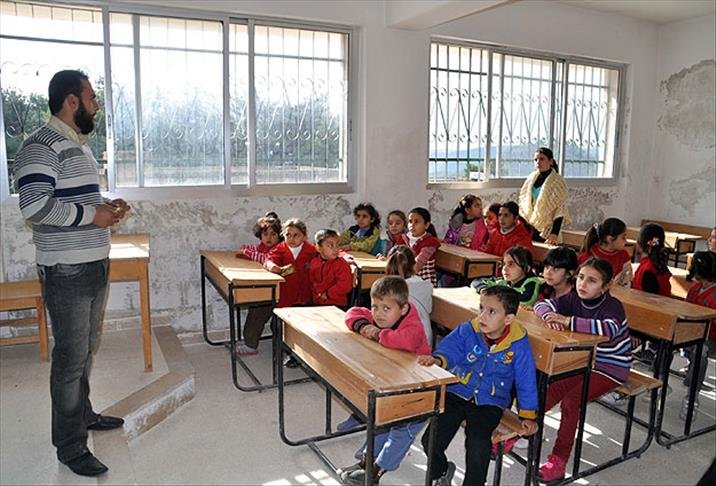
The Ministry of Justice in Syria’s Transitional Government has announced legal measures against parents who fail to send their children to school, as part of a broader plan to combat student dropout rates. However, observers have criticized the move, arguing that it is aimed at enforcing a conservative, traditionally rooted educational approach rather than simply promoting access to education.
In a directive published on its official Facebook page, the ministry stated that the measures will include financial penalties and fines for violators, emphasizing the need for swift implementation to ensure compliance with the legal framework guaranteeing children’s right to education.
The ministry added that the purpose of these actions is to ensure all children are enrolled in school and that any negligence by parents or guardians is properly addressed. Nonetheless, critics warned that strict enforcement of such policies could spark debate over the family’s freedom to choose the type of education their children receive.
At the same time, the Ministry of Education announced new efforts to revive Syria’s school system, reporting that 750 schools have been rehabilitated in recent months, with restoration work continuing on another 850 schools across the country. The program aims to create safe and appealing learning environments for students.
Mohammad Al-Hannoun, Director of School Buildings, explained that the damage to schools varied from total to partial destruction, while others became unusable due to neglect, looting, or aging infrastructure. He stressed that the ministry is working to restore and equip schools with desks, boards, and modern teaching tools to provide a seat for every student and foster an environment aligned with the government’s official educational direction.
This initiative comes amid growing concerns that the policy of compulsory education could be used as a tool to strengthen conservative ideological tendencies within the education system, extending beyond traditional goals of academic achievement and literacy.