Special Report: Expanding the Scope of the Adana Treaty between Syria and Turkey – Backgrounds and Regional Intersections
New Negotiations and a Framework for Expansion
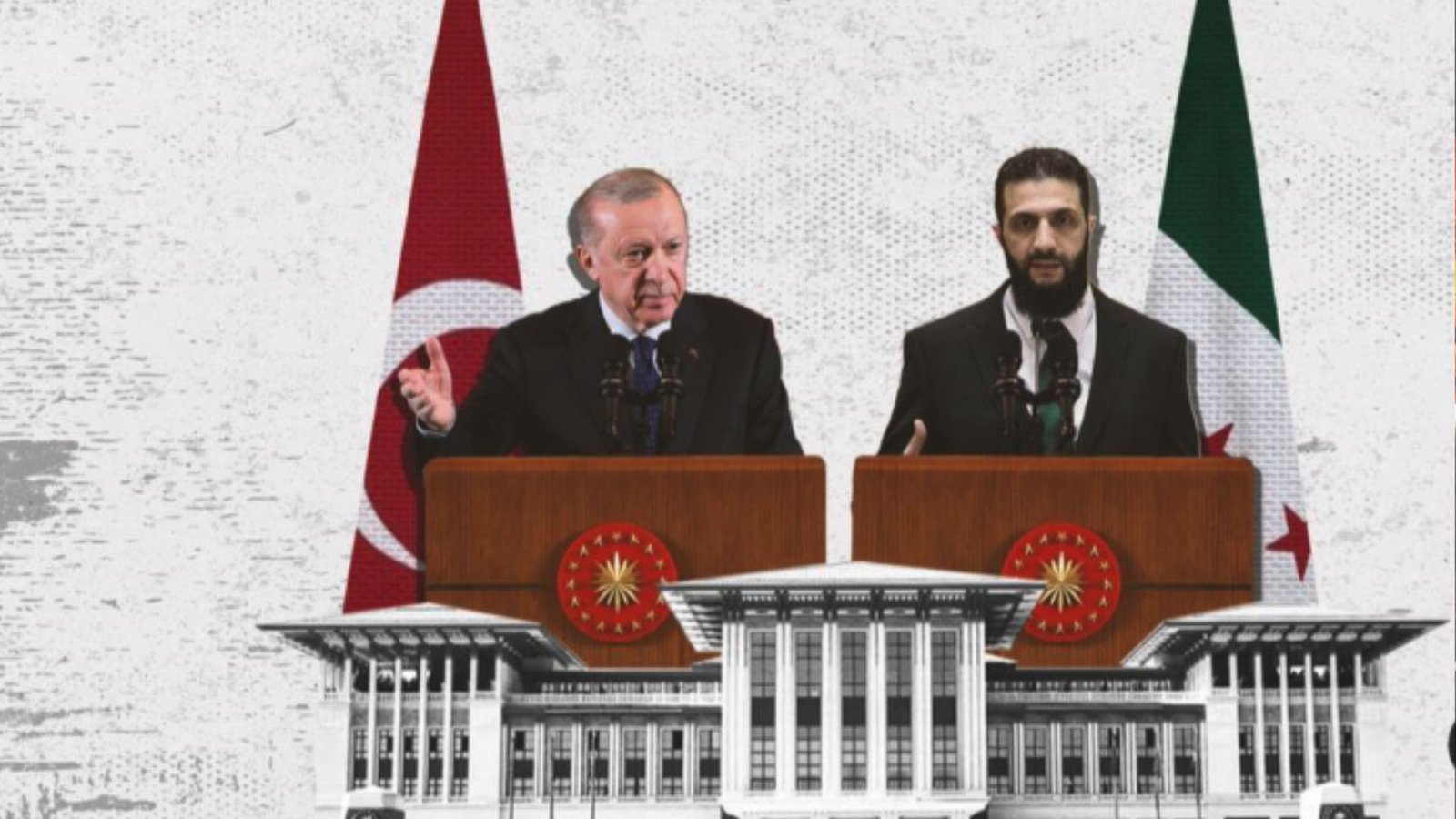
Ankara and Damascus are negotiating the expansion of the Adana Agreement, signed between the governments of Turkey and Syria in October 1998. The agreement led to the departure of Kurdistan Workers’ Party (PKK) leader Abdullah Öcalan from Syria and ended a crisis between the two countries that nearly escalated into a military conflict.
According to exclusive information and a Bloomberg report, negotiations are underway to provide Syria with military equipment, including armored vehicles, drones, and air defense systems. This comes in exchange for increasing the depth of the area in northern Syria where the Turkish army is allowed to advance—from 5 kilometers to 30 kilometers—to pursue PKK elements.
This is the same depth as the “safe zone” established between the cities of Ras al-Ayn and Tal Abyad under the U.S.-Turkey agreement at the end of 2019. Ankara has been careful not to deploy its equipment deeper into Syria, after Israel previously targeted attempts to establish bases in central Syria. The renewed discussion of the Adana Agreement and its “expansion” carries particular significance amid these important developments.
Political Developments and Ongoing Negotiations
Talks between the Syrian Democratic Forces and Damascus:
Negotiations are taking place between the Syrian Democratic Forces, which include the Kurdish People’s Protection Units (YPG)—considered by Ankara as an extension of the PKK—for integration into the Syrian army.
Agreements with Öcalan:
The Erdoğan government also reached an agreement with Öcalan, imprisoned since early 1999, which included disarmament and holding political elections.
Key Questions:
- What is the Adana Agreement?
- What are its public and secret clauses?
- What does its relaunch and expansion mean?
- What is the story of Abdullah Öcalan and his relationship with Syria?
- Ankara and Turkey… leverage points.
Syrian-Turkish Relations and Major Shifts
Relations between the neighboring countries, Syria and Turkey, have undergone significant changes over recent decades, reaching the point of war, most recently in the mid-1990s. Ankara used the issue of the Tigris and Euphrates rivers to pressure Damascus.
Meanwhile, Syria hosted PKK leader Abdullah Öcalan in the early 1980s. Öcalan maintained contacts with Syrian intelligence, and his members fought alongside Palestinian factions during Syria’s military presence in Lebanon. No political official publicly acknowledged him until 1992, when the late Vice President Abdul Halim Khaddam met him for the first time. He subsequently met Öcalan multiple times to persuade him to pursue political solutions with Turkey, as part of Damascus’s mediation with the government of Necmettin Erbakan.
The mediation between Öcalan and Ankara failed, and Damascus continued to host him, refusing Ankara’s demands for extradition. In 1998, Turkey mobilized its army on the Syrian border and issued a final ultimatum, demanding Öcalan’s handover.
Official Documents and the 1998 Crisis
Al-Majalla published official Syrian documents that Khaddam handed to Paris before his departure in 2005. In the context of the renewed Adana Agreement, additional Syrian documents have been released.
In mid-1998, after Turkey threatened military action unless Öcalan was expelled, Assad received Khaddam in Latakia on October 1, 1998. Khaddam recounted: “While we were discussing Lebanon, the minister entered and handed me an envelope, which we opened. It contained a statement from Turkish President Süleyman Demirel, threatening Syria with military action if Öcalan was not handed over. It also mentioned Turkey’s discontent with Syria’s support for Kurdish terrorism, which caused tens of thousands of Turkish casualties.”
After discussing the matter with Assad, Khaddam said the agreement was that the threats “came in coordination with Israel and the United States, and were linked to pressure on us to reach an agreement with Israel (due to secret negotiations between Assad and Benjamin Netanyahu) within the framework of the new regional alliance.”
Egyptian Mediation and Secret Meetings
The late President Hosni Mubarak contacted Assad, and the two leaders agreed on Mubarak’s visit to Assad on October 4, 1998. They discussed the matter, then Mubarak went to Turkey, met Demirel, and returned to Assad in Ankara on October 6, 1998, for a private meeting.
The previous day, Foreign Minister Farouk al-Sharaa contacted Khaddam and requested a meeting at his home to discuss Turkish threats. Khaddam said: “I received him (Sharaa) at 8 p.m., and we discussed the possibility of escalating the crisis with Turkey, as well as Öcalan’s presence in Syria and Turkey’s demand for his departure.”
Timeline of Events:
- July 1996 – Khaddam met Öcalan and agreed to his departure from Syria.
- October 4, 1998 – Mubarak visited Damascus.
- October 6, 1998 – Secret meeting with Öcalan.
- October 8, 1998 – Öcalan leaves Syria.
Khaddam and Sharaa called Major General Adnan Badr al-Hassan, head of political security at the time, to a meeting to discuss how to brief him on the situation. Assad preferred Khaddam for this task, and he coordinated with al-Hassan to arrange a private meeting with Öcalan on October 6, 1998.
Öcalan’s Meeting and Departure
The meeting took place, and Öcalan was surprised by Khaddam’s presence. After lengthy discussions, the Syrian vice president informed him of the decision. The dialogue included:
Öcalan: “I will contact my friends in Greece to arrange the matter (leaving Syria). The time is not in our favor, and the current situation is different from a year ago when we discussed this issue. I will make my arrangements soon.”
PKK leader Öcalan left Syria on Thursday, October 8, heading to Greece. Greece nearly arrested him, but his group took him to Russia, where he stayed for about two weeks. Under U.S. pressure on Moscow, despite the Duma granting him political asylum, he requested asylum in Italy, stayed there briefly, then was sent to Kenya, where Turkish intelligence abducted him in February 1999. A few months later, he was tried and sentenced to death. He remains in prison today.
Mazla Talks and the Adana Summit
President Mubarak contacted President Süleyman Demirel to convey Syria’s position. The leaders agreed on Egyptian Foreign Minister Amr Moussa visiting Turkey on Monday, October 11.
A series of Egyptian-Syrian-Turkish communications followed. On October 12, Moussa visited Ankara, met with the Turkish president and foreign minister İsmail Cem, and conveyed Syria’s response. A positive atmosphere prevailed, and it was agreed to hold a security meeting on the Syrian-Turkish border within a few days.
On October 13, the Turkish ambassador informed the director of the European Affairs Department at the Ministry of Foreign Affairs, Saba Nasser, that the Syrian and Turkish governments had agreed to hold a bilateral meeting on Friday, October 16, 1998, in Ankara, Adana, or Diyarbakır. Proposals to hold the meeting in Aleppo or Latakia were rejected. The Turkish side clarified that its delegation would include military and intelligence officers, and that the discussion would focus solely on security.
Negotiation Atmosphere and Agreement Text
The first session of Adana talks lacked diplomatic courtesy, as the Turkish delegation remained seated while the Syrian delegation entered, and media interaction was prohibited. On the second day, the atmosphere improved, and both sides agreed to look toward the future. A different working mechanism from the previous security committee was approved.
The Adana Agreement: Text, Outcomes, and Future
Two days after negotiations, the final document was signed on October 20, 1998, by Syrian General Staff Commander Adnan Badr al-Hassan on the Syrian side and Turkish Deputy Foreign Minister Oğur Ziyal on the Turkish side.
The agreement contributed to improved relations, and several PKK members were arrested and handed over to Ankara. The agreement was temporarily renewed until the outbreak of the Syrian war in 2011, after which relations ceased in 2012.
Later, Moscow attempted to revive the agreement since 2017 with amendments, including allowing Turkish forces to enter Syrian territory up to 30–35 kilometers to suppress Kurdish separatists; however, Assad rejected this.
After his ouster in 2024, negotiations resumed to sign a series of new military agreements, including an updated version of the “Adana Agreement.”
These developments coincide with ongoing negotiations between Damascus and the Syrian Democratic Forces under U.S. auspices, the intensifying Turkish-Israeli competition in Syria, and Syrian-Russian talks on the fate of military bases in Tartus and Latakia, making the revival and expansion of the Adana Agreement a central pivot in reshaping the northern Syrian influence map.