Ceasefire Agreement Between Damascus and SDF Paves the Way for Resuming Political Negotiations
The Syrian transitional government announced on Sunday that it had reached an immediate and comprehensive ceasefire agreement with the Syrian Democratic Forces (SDF), covering various fronts in the north and northeast of the country, including eastern rural Aleppo. This move is described as paving the way for a fresh start in the negotiation process between the two sides.
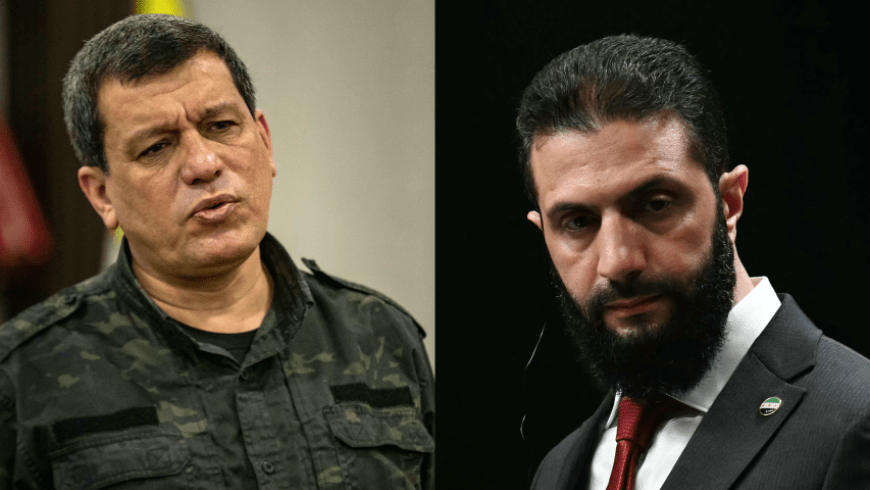
The announcement followed a high-level meeting in Damascus attended by Syrian Defense Minister Major General Marhaf Abu Qasra and SDF Commander Mazloum Abdi, where both parties affirmed their commitment to halting military operations, focusing on protecting civilians and preventing escalation in border areas.
A source from the negotiation committee for north and northeast Syria described the agreement as a “turning point” but noted that the understanding is “not yet officially documented,” awaiting further negotiation rounds.
According to informed sources, the U.S. special envoy to Syria mediated the de-escalation after rising tensions in rural Aleppo, where mutual shelling caused casualties, prompting both sides to move toward a swift ceasefire.
Initial Negotiation Terms
The negotiation delegation revealed that recent dialogue sessions focused on four main areas:
Integration of the SDF and internal security forces into the structure of the Syrian army.
Constitutional amendments ensuring fair representation of all components, including the Kurds.
Joint management of natural resources, especially oil and gas in eastern Syria.
Mechanisms for the return of displaced persons and enhancing civil partnership between the central government and the autonomous administration.
Abdi indicated these terms were presented as verbal proposals, with a preliminary agreement to work on implementing the March 2025 agreement, considered the foundation for the current dialogue process.
A new negotiation committee, formed from the Kurdish Unity Conference, was also announced to coordinate with the Syrian constitutional committee on possible constitutional amendments.
Upcoming Negotiations
This development coincides with preparations for a second high-level negotiation round focusing on decentralization, institutional integration, border crossings, and airports, reflecting a move toward a comprehensive political settlement.
In central Syrian areas such as Homs and Hama, residents remain cautious about the agreement’s implications, amid concerns over its potential failure, especially with ongoing ISIS cell activity in some eastern regions.
Additional details are expected to be revealed in the coming days amid international calls to support the agreement and warnings of a possible regional escalation if negotiations falter.