Israeli Army Begins Withdrawal from Gaza to Implement Prisoner Exchange Agreement with Hamas
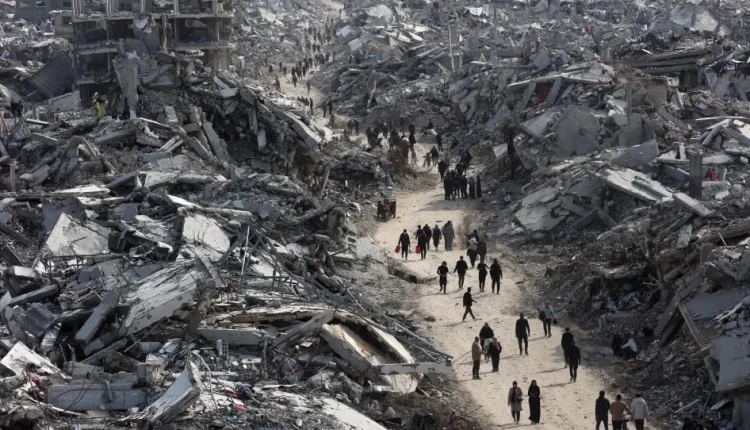
Since late Thursday night and into Friday morning, the Israeli army has started withdrawing its forces from inside the Gaza Strip towards new deployment lines agreed upon with Hamas, as part of a prisoner exchange and ceasefire agreement that took effect early Friday.
According to The Times of Israel, the withdrawal is gradual, with some units having fully pulled out from inside Gaza, while others remain deployed along the new lines. The operation included artillery shelling and airstrikes in some border areas, amid a relative calm in the Strip since the ceasefire began.
Israel is expected to complete the withdrawal by Friday evening, 24 hours after the government approved the agreement with Hamas.
Following the withdrawal, Israel will continue to control about 53% of Gaza’s territory, including buffer zones along the eastern and northern borders with Israel, the Philadelphia corridor on the Egyptian border, areas of Beit Hanoun and Beit Lahia in the north, outskirts of eastern Gaza City, and parts of Rafah and Khan Yunis in the south.
In a related development, Palestinian media reported a limited Israeli airstrike on Khan Yunis early Friday — marking the first breach of the ceasefire since it took effect — while an Israeli soldier was killed in northern Gaza in circumstances not yet clarified.
Khalil al-Hayya, Hamas leader in Gaza, stated that the movement received guarantees from mediators and the U.S. administration that the war has “completely ended,” noting that the agreement includes the release of all living and deceased hostages within 72 hours of the ceasefire’s start.
Meanwhile, Israeli government spokeswoman Shosh Badran emphasized that the agreement will only come fully into effect 24 hours after government ratification, underscoring Hamas’s commitment to releasing all hostages as per international understandings.
This agreement comes amid regional and international efforts to consolidate the ceasefire and prepare conditions for the prisoner exchange and humanitarian aid phase, with the world closely watching how the next stage will unfold.