Updates on the Negotiations between the Autonomous-Administration/Self-Management and the Transitional Government in Raqqa
Negotiation Process
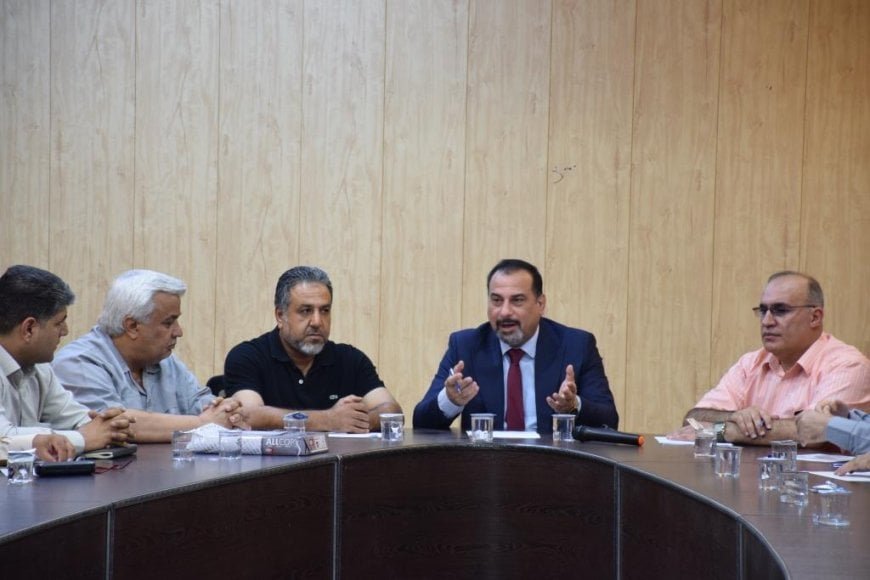
Abdul Hamid Al-Mahbash, co-chair of the negotiation committee representing North and East Syria, presented a comprehensive overview of the work of the specialized committees formed to study the process of institutional integration between the Autonomous Administration and the Transitional Government. He emphasized that the 10 of March Agreement serves as the fundamental reference for the negotiation track, as it lays the foundations for administrative, military, and security integration, and establishes a new phase of decentralization in managing the country’s affairs, while preserving Syria’s national unity and preventing any attempts at division.
Expanded Meeting in Raqqa
The advisory committee of Raqqa city held an expanded meeting with Al-Mahbash in the meeting hall of the Executive Council of the region to discuss the latest developments in the negotiation process. The meeting began with a minute of silence, followed by a detailed explanation from Al-Mahbash about the mechanisms of the parallel committees working between both parties, which aim to address fundamental issues directly affecting citizens’ lives.
Specialized Committees and Critical Issues
The committees focus on several fields, including:
•Security and Military: Coordinating the integration of military and security institutions to ensure stability.
•Education: Reviewing curricula and ensuring the continuity of the educational process.
•Border Crossings and Economy: Organizing commercial movement and securing economic resources.
•Health and Public Services: Improving the quality of health services and enhancing infrastructure.
•Amendment of the Constitutional Declaration: Aligning laws with the current phase and decentralization requirements.
Enhancing Legal and Administrative Stability
Al-Mahbash confirmed that the committees will hold their meetings alternately between Damascus and North and East Syria, within a framework of seriousness and national responsibility, to ensure the implementation of the agreement and to serve the interests of all Syrians, while reinforcing legal and administrative stability in the different regions.
Support from Attendees and International Guarantees
The attendees, including tribal elders, intellectuals, political and human rights elites, expressed their full support for the central negotiation committee, emphasizing the importance of clear international guarantees for the implementation of any agreement, especially from the United States and France. They also called for the involvement of Saudi Arabia due to its pivotal role in supporting regional stability and strengthening a comprehensive national project that preserves Syria’s unity and sovereignty.
Dialogue as a Strategic Choice
The meeting concluded with participants affirming their commitment to dialogue as a strategic tool to build a new Syria — united, participatory, and just — based on the principles of citizenship and equality, ensuring full rights for all components without discrimination, while emphasizing the necessity to expedite the implementation of the March 10 Agreement provisions in a way that serves the interests of all Syrians.